

close
Choose Your Site
Global
Social Media
Views: 0 Author: Site Editor Publish Time: 2026-02-05 Origin: Site


When a piping system needs to stop flow quickly, the valve choice becomes much more than a simple component decision. In real operating conditions, shutdown speed affects safety, maintenance efficiency, leak control, operator response time, and sometimes even equipment protection. That is why the Ball Valve is so widely used in water, gas, plumbing, utility, and industrial on-off applications. A ball valve is not popular only because it is compact or familiar. It is preferred because its design is naturally suited to fast shut off control: a quarter-turn handle, a straightforward open-close action, and a sealing structure built for dependable isolation. Industry references consistently describe ball valves as quarter-turn valves used for on-off control of liquids and gases, with fast operation and positive or bubble-tight shutoff in many common designs.
A ball valve is a valve that uses a drilled ball inside the valve body to control flow. When the hole in the ball aligns with the flow path, the valve is open. When the ball rotates 90 degrees so the hole is perpendicular to the flow path, the valve is closed. Because of this design, ball valves are commonly described as quarter-turn valves for on-off service.
This simple motion is one of the biggest reasons they are favored in shutoff applications. Instead of requiring multiple turns, the operator can move from fully open to fully closed with a short, clear handle movement. That makes operation faster and easier to confirm visually.
The first reason ball valves are better for fast shut off control is the most obvious one: speed of operation. A standard ball valve opens or closes with a quarter turn. That means the operator can shut off flow almost immediately compared with valves that require multiple turns to travel from open to closed. Multiple industry and manufacturer references describe this fast 90-degree turn operation as a defining feature of ball valves.
In practical terms, this gives you several benefits:
faster response during leaks or line service
easier operator training
less time spent opening and closing repeatedly
simpler remote or actuated control logic
reduced chance of leaving the valve “half-adjusted” by mistake
For systems where immediate response matters, that quarter-turn action is the core performance advantage.
Fast shutoff is not only about how quickly the valve rotates. It is also about how clearly the operator can understand the valve’s position. With many ball valves, the handle direction gives direct visual confirmation:
handle in line with the pipe = open
handle across the pipe = closed
This simple visual cue helps reduce operating mistakes and speeds up manual checks in busy installations. Some manufacturers specifically note the visual confirmation advantage of the handle position in quarter-turn ball valve designs.
For maintenance teams, this means less guesswork. In a crowded valve network, that clarity can save time and improve shutoff confidence.
Another major reason ball valves are preferred is sealing performance. Many product references describe ball valves as providing positive shutoff, leak-tight sealing, or bubble-tight shutoff depending on design and seat material.
This matters because a valve used for fast shut off control is often chosen for isolation. If the valve closes quickly but does not seal reliably, the system still has a problem. A well-specified ball valve helps address both needs at once:
fast closure
reliable isolation
reduced seepage risk
more dependable maintenance shutdowns
That combination is one reason ball valves are widely used where on-off service is the main priority.
A ball valve’s quarter-turn action is even more useful because many designs offer low operating torque. Several manufacturer sources describe ball valves as offering smooth quarter-turn operation with relatively low torque compared with what users might expect from frequent shutoff duty.
Why does that matter? Because low torque means:
easier manual operation
less strain on handles and actuators
faster cycling in automated systems
more consistent operation over time
For a technician or operator, a valve that closes fast and turns easily is simply more practical in daily use.
Some valves are fine when opened or closed only occasionally. Ball valves, however, are commonly selected where shutoff happens more often. Industry comparisons often describe ball valves as especially suitable for frequent operation and quick isolation service.
That makes them a strong option for:
utility isolation points
equipment inlet and outlet shutoff
service bypass arrangements
drain and fill points
process lines with routine open-close cycles
In these situations, fast action and repeatable shutoff become more important than slow, gradual manual travel.
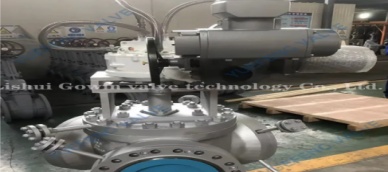
In addition to fast shutoff, ball valves are often valued because many designs provide a relatively direct flow path when fully open. Manufacturer references for full-port or similar ball valve designs note low pressure drop or minimal flow restriction as a common advantage.
This supports shutoff applications because the same valve that isolates quickly can also allow efficient flow during normal operation. In practice, that means:
less unnecessary restriction when open
more efficient line performance
a simpler choice for systems that want strong on-off behavior without major flow penalty
This is not the only reason to choose a ball valve, but it is an important supporting benefit.
A useful way to understand the advantage of ball valves is to compare them with valves that open and close through multiple turns, such as gate-style shutoff valves. Recent comparison sources repeatedly note that ball valves offer rapid shutoff with quarter-turn movement, while gate valves are slower because they require multiple turns to fully open or close.
Feature | Ball Valve | Multi-Turn Shutoff Valve |
Operating motion | Quarter-turn | Multiple turns |
Shutoff speed | Fast | Slower |
Visual open/closed check | Easy | Less immediate |
Typical use | On-off isolation | Slower open-close service |
Operator convenience | High | Moderate |
This does not mean every other valve is wrong. It simply explains why a ball valve is often the better fit when fast shutoff control is the priority.
When a valve is installed for emergency response or routine service isolation, operators usually want three things:
Fast action
Clear position
Tight shutoff
Ball valves match this need very well because their design directly supports all three. That is why they are so common in systems where technicians need to isolate a branch, stop a leak, service downstream equipment, or quickly control a utility line. Their quarter-turn design and dependable sealing are exactly aligned with that job.
A ball valve is often relatively compact for the level of shutoff performance it delivers. Some manufacturer references specifically describe quarter-turn ball valve assemblies as compact and efficient in design.
This helps in:
tighter installation spaces
skid-mounted equipment
compact manifolds
utility cabinets
machine enclosures
When space is limited, a compact fast-shutoff valve is easier to fit into the system design.
So, why are ball valves better for fast shut off control? The answer is practical and straightforward: they combine quarter-turn speed, easy visual confirmation, reliable shutoff performance, low operating torque, and compact on-off control in a design that fits real-world piping needs. Industry and manufacturer references consistently describe ball valves as quarter-turn devices for liquids and gases, valued for quick operation and dependable shutoff in on-off service.
From our perspective, that makes the ball valve one of the most efficient and user-friendly choices for systems where fast isolation matters. Whether the goal is protecting equipment, improving maintenance efficiency, or giving operators a faster way to stop flow, the right ball valve can make that control simpler and more reliable. If you are evaluating Ball Valve options for quick shutoff applications, you are welcome to learn more through www.gwvvalve.com and explore the right solution for your project.
A ball valve is typically better because it uses quarter-turn operation, allowing the valve to move from fully open to fully closed with a 90-degree turn. That makes shutoff faster and easier than many multi-turn designs.
Many ball valve designs are built for positive, leak-tight, or bubble-tight shutoff, which is one reason they are widely used for on-off isolation service.
Yes. Ball valves are commonly used in applications that require frequent open-close cycles because their quarter-turn design makes them quick and practical to operate.
You should check the media type, pressure and temperature rating, connection type, shutoff frequency, seat material, and whether the valve will be manual or actuated. Those details help ensure the valve matches the real application.


