

close
Choose Your Site
Global
Social Media
Views: 0 Author: Site Editor Publish Time: 2026-02-28 Origin: Site


In fluid control systems, some components attract attention because they are complex, while others earn their value by doing one job extremely well, every single day. The ball valve belongs to the second group. It is widely used in industrial pipelines, water systems, oil and gas lines, chemical processing, commercial equipment, and many general-purpose flow control applications because it offers something operators and buyers both appreciate: simple, dependable shut-off control. When people ask us about the purpose of a ball valve, they are often trying to solve a practical problem. They want to know whether it is the right valve for isolating media, protecting downstream equipment, reducing maintenance issues, or improving operating efficiency. In real projects, the answer is often yes—because a ball valve is designed to provide quick opening and closing, reliable sealing, and straightforward operation in a wide range of working conditions.
From our perspective as a valve supplier, the purpose of a ball valve is not limited to “stopping flow.” Its real purpose is to help a piping system operate more safely, more efficiently, and more predictably. A well-selected ball valve can simplify operation, reduce leakage risk, shorten response time, and support long-term reliability in both manual and automated systems.
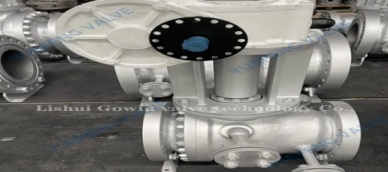
A ball valve is a quarter-turn valve that uses a spherical ball with a hole (or bore) through its center to control the flow of liquid or gas. When the hole aligns with the pipeline, the valve is open and media can pass through. When the ball rotates 90 degrees, the hole turns away from the flow path, and the valve closes.
This simple operating principle is one of the main reasons ball valves are so popular. Instead of multiple turns like some other valve types, a ball valve can move from fully open to fully closed with a quick quarter-turn motion.
Valve body
Ball
Stem
Seats
Seals
Handle or actuator
Because of this compact and efficient design, the ball valve is commonly chosen for systems that require reliable on/off control with minimal operating effort.
The primary purpose of a ball valve is to start, stop, or isolate flow quickly and reliably. This makes it one of the most practical valve types for systems where positive shut-off is important.
In everyday operation, a ball valve is used to:
isolate sections of a pipeline
stop fluid flow for maintenance or repair
allow fast shut-off in emergency situations
open flow quickly when production resumes
reduce leakage risk when fully closed
simplify system control in manual or automated lines
This is why the ball valve is often seen as a highly efficient shut-off valve. It is built to make flow control more direct and easier to manage.
A valve becomes popular in industry only if it solves real operational needs. Ball valves remain widely used because they combine several practical advantages in one product.
A ball valve only needs a 90-degree turn to open or close. This allows for:
quick manual control
fast emergency response
easier automation with actuators
In systems where operators need immediate shut-off, this speed matters.
One of the key purposes of a ball valve is to provide dependable sealing when closed. In many applications, this helps:
reduce leakage
protect downstream equipment
improve maintenance safety
support stable operating conditions
The open/closed position is easy to understand visually. In many cases:
handle parallel to pipe = open
handle perpendicular to pipe = closed
This simplicity reduces operating errors.
Ball valves are used in:
water systems
oil and gas lines
chemical pipelines
compressed air systems
industrial process systems
commercial plumbing and utility lines
Because they are versatile, they fit many general and specialized flow control tasks.
The exact purpose of a ball valve can vary slightly depending on where it is installed.
Application Area | Purpose of the Ball Valve | Why It Is Chosen |
Water systems | shut off and isolate flow | simple, quick control |
Industrial piping | process isolation | dependable sealing |
Oil and gas | line control and emergency shut-off | fast response |
Chemical systems | media isolation | compact and reliable |
Compressed air | air line control | easy operation |
Equipment systems | maintenance isolation | efficient on/off control |
This table shows that while the specific industry may change, the core purpose remains consistent: safe and reliable flow isolation.
In many projects, the most important purpose of a ball valve is to act as a shut-off valve. This means its main job is not complex regulation, but dependable opening and closing.
A shut-off valve must do several things well:
close securely
open quickly
resist wear from repeated use
maintain stable performance over time
Ball valves are well suited for this role because their design supports direct, efficient shut-off with relatively low operating effort.
That is why, in many installations, engineers choose ball valves when the priority is:
clear on/off function
simple operator control
low maintenance in daily operation
strong sealing performance
This is a common question. The purpose of a ball valve is mainly on/off control, not fine throttling. While a ball valve can sometimes be partially opened to reduce flow, that is usually not its ideal long-term role in standard applications.
Why?
Ball valves are best when fully open or fully closed.
Partial opening can create uneven wear in some conditions.
Other valve types may be better for precise flow regulation.
So, if the goal is reliable shut-off, a ball valve is often an excellent choice. If the goal is continuous fine adjustment, another valve type may be more suitable depending on the system design.
This is an important distinction: the purpose of the ball valve is primarily isolation and quick control, not delicate flow balancing.
From an operational viewpoint, a ball valve helps improve efficiency in several ways.
Quick quarter-turn movement means operators spend less time opening and closing the valve.
The operating position is easy to identify, which helps reduce confusion.
Because ball valves rotate only 90 degrees, they are often a practical choice for:
electric actuators
pneumatic actuators
automated process control systems
A good ball valve can help simplify isolation during service work, allowing maintenance teams to:
separate equipment sections more easily
reduce unnecessary downtime
improve safety during inspection and repair
This is one reason ball valves are often found near pumps, tanks, filters, meters, and process equipment.
Not every valve is selected for the same reason, but buyers often prefer a ball valve because it offers a strong balance of performance and practicality.
quick shut-off
compact design
straightforward operation
dependable sealing when closed
suitability for many fluids and gases
easy integration into manual or automated systems
These strengths make the ball valve one of the most widely accepted valve designs in both industrial and commercial use.
So, what is the purpose of the ball valve? At its core, the purpose of a ball valve is to provide fast, reliable, and efficient flow shut-off and isolation in a wide range of piping systems. It helps operators start or stop flow quickly, isolate equipment for maintenance, reduce leakage risk, and simplify overall system control. That is why ball valves remain one of the most trusted and widely used valve types in industrial, commercial, and utility applications. Their simple quarter-turn design, dependable sealing performance, and practical operating advantages make them an excellent solution wherever straightforward on/off control is the priority.
At www.gwvvalve.com, we understand that choosing the right valve is about more than specifications on paper—it is about reliable performance in real working conditions. If you are evaluating a ball valve for your project and want a solution that matches your application, operating requirements, and long-term performance goals, you are welcome to visit www.gwvvalve.com to learn more and explore suitable valve options.
The main purpose of a ball valve is to provide quick and reliable on/off flow control, especially for shut-off and isolation in piping systems.
A ball valve is mainly used for shut-off and isolation. It is generally best suited for fully open or fully closed operation.
It is popular because it offers fast quarter-turn operation, dependable sealing, simple handling, and broad application use in many types of systems.
Yes. A ball valve is often used in automated systems because its quarter-turn design works well with electric and pneumatic actuators.


