

close
Choose Your Site
Global
Social Media
Views: 0 Author: Site Editor Publish Time: 2026-02-28 Origin: Site


When buyers ask us, “What is the difference between a ball valve and a regular valve?”, they are usually trying to solve a practical selection problem: which valve type will be easier to operate, seal more reliably, and fit the real working conditions of the pipeline. The challenge is that the phrase “regular valve” is not a strict technical category. In real projects, people often use it to describe more traditional valve types such as gate valves, globe valves, or other common shutoff valves. That is why this comparison is less about one exact product versus another, and more about understanding how a ball valve differs from conventional valve designs in structure, working method, and day-to-day performance.
From our perspective as a valve supplier, the biggest difference is simple: a ball valve uses a rotating ball with a hole through its center to open or shut off flow quickly, while many “regular” valves rely on a rising stem, disc, or gate moving up and down to control the passage. That difference changes everything—turning speed, sealing style, pressure drop, maintenance habits, and how suitable the valve is for frequent operation. In this article, we’ll explain the difference clearly, compare key features side by side, and help you understand when a ball valve is the better choice for your system.
A ball valve is a quarter-turn valve that uses a hollow, drilled ball inside the valve body. When the hole in the ball lines up with the pipeline, the flow passes through. When the ball rotates 90 degrees, the hole turns away from the flow path and the valve closes.
In simple terms:
Handle parallel to the pipe = open
Handle perpendicular to the pipe = closed
This quick quarter-turn action is one of the main reasons ball valves are widely used in industrial, commercial, and residential systems.
In many buyer conversations, “regular valve” usually refers to more traditional shutoff or control valves, such as:
Gate valve
Globe valve
Stop valve
Sometimes even butterfly valve, depending on local usage
For this article, we will use “regular valve” to mean traditional multi-turn valve types, especially gate and globe valves, because these are the most common valves people compare against ball valves.
The most important difference is how the valve opens and closes.
A ball valve works by rotating an internal ball. This is a quarter-turn action, which means it opens or closes very quickly.
A traditional valve usually works by raising or lowering a component such as a gate or disc. This is a multi-turn action, which means it takes more time and more handle rotation to open or close.
This mechanical difference directly affects speed, convenience, and wear patterns.
Feature | Ball Valve | Regular Valve (Gate/Globe Type) |
Operating method | Quarter-turn | Multi-turn |
Opening/closing speed | Fast | Slower |
Shutoff performance | Strong, quick sealing | Depends on type and condition |
Flow path | Usually straight-through | Often more restricted |
Pressure drop | Lower in full-port designs | Often higher |
Best for frequent operation | Yes | Depends on valve type |
Fine flow regulation | Limited in many cases | Better with globe-style valves |
Maintenance style | Often simple, compact | Can involve more moving parts |
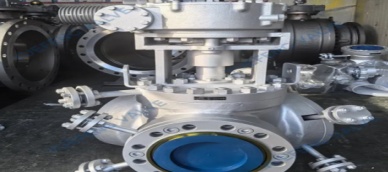
One of the clearest differences is operating speed.
A ball valve can usually be opened or closed with a single 90-degree turn. This is especially useful when:
quick shutoff is needed
the valve is operated often
the operator wants simple, clear position control
A traditional gate or globe valve usually needs multiple turns to move the gate or disc fully. This can be perfectly fine in systems where:
the valve is not operated frequently
gradual adjustment is preferred
fast shutoff is not critical
So, if speed and convenience matter, a ball valve often has the advantage.
Another major difference is how the valve seals.
Ball valves are widely valued for their tight shutoff. Because the ball rotates into position and seats firmly against sealing surfaces, they are often chosen for applications where reliable on/off isolation is important.
Traditional valves can also provide shutoff, but the sealing style depends heavily on the design:
Gate valves are good for full open/full close service
Globe valves are better for control but may not match the quick shutoff style of a ball valve
For many users, the ball valve feels simpler and more direct when the goal is just “open” or “closed.”
A full-port ball valve offers a more direct flow path, which means:
less resistance
lower pressure drop
smoother passage for many fluids
This makes ball valves popular where efficient flow is important.
Many traditional valves create more flow resistance because the flow changes direction or moves around internal components. This can increase pressure drop, especially in globe-type valves.
So, when you want a more open, less restricted path, a ball valve is often the better option.
This is where the comparison becomes more application-specific.
Ball valves are excellent for on/off service, but in many standard applications, they are not the first choice for precise throttling. Partially open ball valves can sometimes cause:
uneven wear
seat stress
less precise control compared with dedicated regulating valves
Some traditional valves, especially globe valves, are better for flow regulation because their internal design allows more controlled adjustment.
So, if your main goal is:
quick shutoff → ball valve is often ideal
precise flow control → a traditional regulating-style valve may be more suitable
In real use, many operators prefer ball valves because they are straightforward.
clear open/closed position
simple quarter-turn movement
less time required for operation
compact handle action
more turns required
sometimes more effort if the valve is large or rarely used
open/closed position may not feel as visually obvious at a glance
For systems that require frequent operator action, this difference matters.
Ball valves are often appreciated for:
compact construction
quick operation
fewer turns and less routine handling time
In many systems, this makes them practical and efficient.
Traditional valves can still be very durable, especially in established industrial systems, but they may involve:
more mechanical travel
more parts moving over a longer stroke
more attention to stem and seating condition over time
The right choice depends on the actual service conditions, media, and operating frequency.
fast shutoff systems
general on/off service
water, gas, oil, and many utility lines
systems where low pressure drop is important
compact installations
applications needing gradual control
systems already built around traditional valve standards
situations where a specific valve type (like globe valve) better matches flow regulation needs
So, what is the difference between a ball valve and a regular valve? The biggest difference is that a ball valve uses a quarter-turn rotating ball for quick, direct shutoff, while a regular valve usually relies on a multi-turn rising or lowering mechanism such as a gate or disc. This affects how fast the valve operates, how it seals, how much resistance it creates in the pipeline, and whether it is better suited for shutoff or flow adjustment. In many systems, ball valves are favored because they are fast, simple, and highly effective for on/off service. Traditional valves, however, still remain important where flow control or specific operating characteristics are needed.
At the end of the day, the right choice depends on the actual job your valve needs to do. If you are comparing valve options for your project and want to understand which Ball Valve solution is better suited for your working conditions, you can visit www.gwvvalve.com to learn more. We are also glad to share product details and help you choose a suitable valve configuration based on your application requirements.
The main advantage of a ball valve is its quick quarter-turn operation, which makes it very effective for fast and reliable shutoff.
It depends on the application. A ball valve is often better for on/off service, while some regular valves are better for precise flow control.
It can be used in some cases, but standard ball valves are generally better for full open/full close service than for fine throttling.
Many users choose ball valves because they are easy to operate, seal well, and usually provide a more direct flow path with lower resistance.


