

close
Choose Your Site
Global
Social Media
Views: 0 Author: Site Editor Publish Time: 2026-03-03 Origin: Site


When customers ask us, “What is the life expectancy of a ball valve?”, they are usually trying to answer a practical question: How long will this valve keep working reliably before leakage, stiffness, or replacement becomes a real issue? The honest answer is that there is no single fixed number for every application. A Ball Valve in a clean, low-pressure water line that is opened only occasionally may last much longer than a valve in a hot, high-pressure system that cycles constantly. That is why service life is never determined by material alone or price alone. It is the result of valve design, seat and seal quality, operating conditions, cycling frequency, installation quality, and maintenance habits.
At the same time, the market does provide useful reference points. Some manufacturers commonly estimate a general ball valve lifespan at around 8 to 10 years under typical service conditions, while real-world service life can be shorter or longer depending on how demanding the application is. From our perspective, the best way to think about ball valve life expectancy is not “How many years by default?” but “What conditions will determine whether this valve reaches or exceeds its expected service life?”
A Ball Valve does not have one universal service-life number because valve life is heavily application-dependent. Industry sources consistently describe ball valve life as being influenced by pressure, temperature, cycling frequency, media compatibility, seal wear, and maintenance conditions. In other words, two valves with the same nominal size and material can have very different lifespans if one is used in a stable, clean system and the other is used in a harsh, high-cycle process line.
That said, many manufacturers and maintenance guides treat 8–10 years as a common expectation for many general service ball valves, provided the valve is correctly selected and used in reasonable operating conditions. This should be understood as a practical reference, not a guarantee. Some valves last much longer, while others fail earlier because the service is more demanding than the valve selection assumed.
In most cases, the ball itself and the valve body are not the first parts to fail. Maintenance guides note that seals and seats are typically the first wear components because they are softer than the main metal body. That means a ball valve often reaches the end of its “useful life” not because the valve body breaks, but because:
sealing performance degrades
operating torque increases
leakage begins internally or externally
the valve becomes difficult to actuate smoothly
This is an important buying point: when evaluating life expectancy, you are often really evaluating seat, seal, and service compatibility life, not only metal body durability.
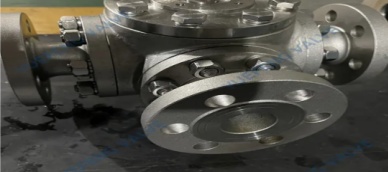
Pressure and temperature are two of the most important life drivers. Multiple valve maintenance sources note that valves used close to their rated pressure and temperature limits will generally require service or replacement sooner than valves used under lighter conditions.
Why this matters:
high pressure increases sealing stress
higher temperatures can accelerate seat and seal wear
temperature cycling can change material behavior over time
combined high pressure + high temperature shortens margin for error
A valve used well within its ratings typically has a better chance of long, stable service than one operated continuously near its design limit.
A ball valve’s life is strongly tied to how often it opens and closes. Valve cycle-life guidance explains that cycle life is not fixed and varies with temperature, pressure, media cleanliness, lubrication, cycle rate, and valve design.
In practical terms:
a shutoff valve opened only during maintenance may last many years
a frequently cycled automated valve may wear faster
repeated actuation creates ongoing wear at seats, seals, and stem packing
This is why the same valve model can show very different real lifespans in different systems. If your application involves frequent on/off control, cycle life should be part of the selection process—not an afterthought.
The nature of the fluid or gas inside the valve has a major impact on life expectancy. Industry guides consistently identify media compatibility as one of the most direct lifespan factors.
Examples:
clean water is very different from abrasive slurry
dry gas behaves differently from sticky or contaminated fluid
aggressive chemicals can damage seats and seals
particulate contamination can scratch sealing surfaces
Even if the valve body metal is suitable, the seat and seal materials must also match the media. A mismatch here often causes early leakage, hard operation, or rapid sealing wear.
The sealing system is usually the first wear zone in a ball valve, so material quality and finish quality matter a great deal. Maintenance and seat-selection guides highlight that service life is strongly influenced by seat material, media handled, and the overall severity of service.
A longer-lasting ball valve usually benefits from:
suitable seat material for the medium
consistent machining and surface finish
reliable stem sealing design
stable shutoff behavior under repeated operation
In real use, a cheaper valve with lower-grade seats may cost more over time if it needs to be replaced early or begins leaking unpredictably.
Even a good valve can have a short life if installation conditions are poor. Valve maintenance sources identify installation method, cleanliness of media, and pipeline conditions as important service-life factors.
Common avoidable life-reducing problems include:
debris left in the pipeline during startup
misalignment that creates mechanical stress
incorrect tightening or support
using the wrong valve for throttling when it was selected for on/off duty
A clean start and correct installation often make a major difference in how long a ball valve remains smooth and leak-free.
A useful way to think about service life is to compare application types rather than trying to force one “years” number onto every use case.
Application Style | Typical Life Expectancy Trend | Main Life-Limiting Factor |
Low-cycle general shutoff | Often longer service life | seal aging over time |
Frequent manual operation | Moderate service life | seat and stem wear |
High-cycle automated on/off duty | Shorter if not matched correctly | cycle wear and heat buildup |
High pressure / high temperature service | Can shorten significantly | seal stress and material limits |
Dirty or abrasive media | Often shorter | surface wear and sealing damage |
This table is not a fixed timeline chart. It simply reflects the real-world pattern that service severity, not just calendar age, defines ball valve lifespan.
The good news is that ball valve life can often be extended with correct selection and basic maintenance. Industry guidance notes that proper maintenance can extend expected lifespan beyond the common baseline range.
Choose the right valve for the actual duty
Do not size or specify based only on pipe size. Match the valve to:
pressure
temperature
media
operation frequency
Avoid running near the maximum rating all the time
Operating too close to the valve’s limit reduces long-term margin.
Protect the sealing surfaces from contamination
Dirty media and startup debris shorten life quickly.
Use maintainable designs where appropriate
Some maintenance guidance notes that three-piece ball valves can allow seal replacement without removing the valve body from the line, while one-piece and two-piece designs are less service-friendly in that respect.
Inspect operating torque and leakage early
If a valve becomes noticeably stiffer or starts to show minor leakage, early service can prevent a larger failure.
So, what is the life expectancy of a ball valve? A practical general expectation is often around 8 to 10 years for many standard applications, but actual service life can vary widely depending on pressure, temperature, media compatibility, cycle frequency, seat and seal quality, installation, and maintenance.
The most important takeaway is this: ball valve life is not decided by calendar time alone. It is decided by how well the valve matches the job. If you want a valve that lasts longer, focus on correct specification, realistic operating conditions, and early attention to wear signs.
To learn more about ball valve selection and product options, you can visit www.gwvvalve.com. We believe the best valve is not only the one that fits the line today, but the one that continues to perform reliably through years of real service. If you are comparing ball valve solutions for your project, that is the best place to start.
In many standard applications, manufacturers often estimate around 8–10 years, but the actual lifespan depends heavily on operating conditions and maintenance.
Common causes include running near pressure/temperature limits, incompatible media, frequent cycling, dirty pipelines, and worn seats or seals.
Yes. Higher cycle frequency increases wear on seats, seals, and stem components, which can shorten service life if the valve is not selected for that duty.
Yes. Proper selection, clean installation, inspection, and timely service can help extend a ball valve’s useful service life beyond the typical baseline


