

close
Choose Your Site
Global
Social Media
Views: 0 Author: Site Editor Publish Time: 2026-05-04 Origin: Site


Choosing the wrong actuator introduces critical points of failure in process control setups. This hardware mismatch inflates long-term energy costs significantly over a plant lifecycle. It also compromises system safety during unexpected power or air supply loss. While both single and double-acting models drive automated valves effectively, their internal mechanics vary greatly. These core mechanical differences dictate fundamentally different lifecycle expectations for your equipment.
This guide strips away surface-level feature lists to focus on engineering realities. We evaluate single and double acting pneumatic actuators based on actual torque curves and total cost of ownership (TCO). You will discover how failure-mode safety logic dictates baseline choices. We also explore how long-term maintenance realities directly impact your final specification. Understanding these engineering parameters ensures you select the safest, most efficient mechanism for your specific fluid control process.
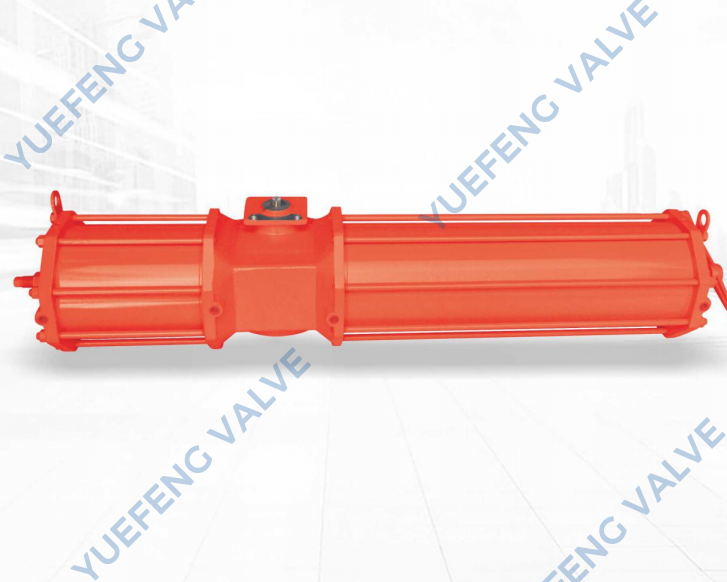
Safety Logic Dictates the Baseline: Single acting actuators provide a mechanical fail-safe (spring return), while double acting actuators fail-in-place, which is preferable only when line shock or material waste must be avoided during outages.
Torque Consistency Varies: Double acting models deliver 100% constant torque; single acting models experience torque loss as the internal spring compresses.
The TCO Trade-off: Single acting models require higher initial capital but consume up to 50% less compressed air per cycle. Double acting units are cheaper upfront but double the system air demand.
Lifespan Expectations: Spring fatigue is the leading cause of single-acting failure (typically 5–7 years), whereas springless double-acting units can execute millions of cycles (7–10+ years).
A Single Acting Pneumatic Actuator uses compressed air to stroke the valve in one direction. A set of internal mechanical springs forces the pistons back to their resting state once air pressure exhausts. Engineers configure this resting state as either Normally Open (NO) or Normally Closed (NC). This configuration depends entirely on the process safety requirements.
This design provides a distinct "fail-safe" advantage. The unit automatically closes or opens the pipeline if the air supply drops suddenly. Power outages or compressor failures trigger this mechanical return instantly. This automatic action prevents hazardous chemical spills. It also shields sensitive downstream equipment from catastrophic pressure damage. You rely on mechanical energy, rather than electrical or pneumatic signals, to secure the pipeline during an emergency.
A Double Acting Pneumatic Actuator relies exclusively on compressed air for movement. The control system directs air to alternating ports on the housing. Supplying air to the central chamber pushes the pistons outward. Supplying air to the end caps pushes the pistons inward. This design contains no mechanical springs whatsoever.
This architecture creates a deliberate "fail-in-place" advantage. If power or air is lost, the actuator holds its current physical position. The pistons freeze in place without air pressure to move them. Engineers make this deliberate choice for highly specific processes. Uncontrolled valve closing causes severe water hammer in high-pressure lines. Sudden closures can also corrupt expensive batch mixtures in pharmaceutical applications. Failing in place actively prevents these complex system issues during temporary outages.
Torque delivery profiles differ drastically between the two designs. Double acting models deliver steady, predictable torque throughout the entire stroke. The air pressure remains constant as it pushes the pistons. They are ideal for systems requiring strict interlocking and precise throttling. You get 100% precision from the first degree of rotation to the last.
Single acting models suffer from inherent torque inconsistency. The mechanical spring creates an opposing force against the air pressure. Your output torque degrades as the air-driven stroke compresses the spring further. The spring pushes back harder as it compresses. To achieve matching torque profiles, a single-acting actuator typically requires a 20% to 40% larger physical footprint. You must upsize the cylinder bore to overcome the internal spring resistance.
The internal mechanical linkage also dictates the performance of a Valve Pneumatic Actuator. Most industrial units use either a Rack and Pinion or a Scotch Yoke design. Rack and pinion designs feature linear gear teeth engaging a central gear. This design benefits high-frequency operations. It delivers a perfectly linear torque output across the full rotation.
Scotch yoke designs operate differently. They use a sliding pin mechanism inside a slotted yoke. This geometry provides massive "breakaway" torque at the beginning and end of the stroke. Torque drops significantly in the middle of the rotation. This characteristic heavily influences the performance of large-diameter ball and butterfly valves. These heavy valves require immense force to unseat their seals. Scotch yoke mechanics dictate this breakaway performance regardless of the specific return mechanism.
Performance Metric | Double Acting Model | Single Acting Model |
|---|---|---|
Torque Consistency | 100% constant throughout stroke | Degrades as spring compresses |
Physical Size Requirement | Highly compact for given output | 20-40% larger bore required |
Drive Force Source | Pneumatic air pressure only | Air pressure opposing spring tension |
Best Fit Application | High precision, high frequency | Fail-safe necessity, critical safety |
Single acting units carry higher upfront material costs. Manufacturers must engineer heavy-duty springs and extended end caps. These larger components require more structural space on your piping skid. You must account for this larger footprint during facility design. Conversely, double acting units are highly compact. They lack bulky spring cartridges entirely. They are inherently cheaper to purchase initially.
We must address a common market myth regarding procurement costs. Many buyers assume fewer air ports make single-acting components cheaper. This logic is completely false. The specialized spring modules drive up the overall unit cost significantly. You pay a premium for the mechanical fail-safe reliability.
Compressed air generation represents a massive utility cost in industrial facilities. Single acting models only use compressed air for half the cycle. The mechanical spring handles the return stroke for free. They can yield up to a 50% reduction in compressed air costs over their lifespan. This accumulates into massive OPEX savings for large plants.
Double acting models consume pressurized air in both directions. They fill one chamber to open the valve. They must then fill the opposing chamber to close it. This requires robust compressor capacity across your facility. It drives up facility energy expenses dramatically in high-cycle environments. You pay for air every time the valve changes position.
Spring fatigue is the primary failure point in single-acting units. You must monitor equipment for diagnostic warning signs regularly. A sluggish return stroke indicates severe spring wear. Unproportional air-stroke speeds point to increasing internal friction. Delayed sensor triggers also signal impending spring failure. You will typically replace these units every 5 to 7 years.
Double acting units eliminate spring fatigue entirely. Maintenance focus shifts solely to internal O-rings and dynamic seals. Proper air filtration and lubrication preserve these seals. This optimized environment often results in millions of cycles before failure. These units easily last 7 to 10 years or more in clean air systems.
TCO Evaluation Checklist
Calculate your facility's exact cost per cubic foot of compressed air.
Estimate the annual cycle count for the specific valve location.
Factor in the replacement cost of heavy-duty springs every 5 to 7 years.
Compare the physical footprint constraints of your current piping layout.
Assess the downtime cost if a valve fails unexpectedly.
You must establish clear success criteria before specification. Specify a single-acting unit when you have an absolute requirement for a mechanical fail-safe. These units fit perfectly in processes with low-to-moderate cycle frequencies. The mechanical safety net overrides any performance limitations.
Target applications center around hazardous materials. Chemical feed lines demand absolute safety during power losses. Municipal gravity systems use them to prevent flooding. Flammable liquid dosing requires automatic shutoffs to prevent fires. Any environment facing power loss must default to a closed state. This reliable action protects facility personnel. It also actively prevents massive tank overflow disasters.
Your success criteria shift for different operational demands. Specify a double-acting unit when your system demands high cycle rates. They fit perfectly when you face tight spatial constraints on a skid. They excel when precision modulation is absolutely critical to the product quality.
Target applications prioritize continuous movement. Machine tool automation relies on their rapid response times. Robotic arms need their compact power density. Compact skid systems use them to save valuable floor space. Continuous processes avoid severe material waste. They also prevent rapid line depressurization by failing in place during a momentary air drop.
Application Mapping Summary
Safety First: Choose single-acting when human safety or environmental protection relies on automatic closure.
Cycle Speed: Choose double-acting for rapid, continuous robotic or machining actions.
Space Limits: Choose double-acting when tight piping systems demand compact equipment profiles.
Energy Limits: Choose single-acting to cut heavy compressor demands in low-cycle, remote pipelines.
Some field technicians attempt to bypass procurement costs with risky field practices. They attach external air accumulators or reserve tanks to a double-acting unit. They use these tanks to "simulate" a spring-return fail-safe mechanism. We strongly advise against this hazardous practice under any circumstance.
This practice severely breaches industrial safety compliances. It cannot guarantee reliable closure if the line loses pressure over time. A small leak in the accumulator renders the fail-safe useless. When the emergency occurs, the reserve air may be gone. Always specify a dedicated spring-return unit for critical safety nodes.
Engineers often overlook the breathing mechanics of spring-return designs. The spring chamber in a single-acting actuator typically vents directly to the atmosphere. The expanding spring creates a vacuum inside the cylinder housing.
This vacuum presents a massive environmental ingress risk. If not properly filtered, the chamber pulls in ambient moisture. It actively sucks in dust and particulate matter during the return stroke. This abrasive debris accelerates internal corrosion rapidly. You must install proper breather bug screens. You should also route exhaust air back into the chamber in highly corrosive environments to keep internal components clean.
Some industrial facilities lack completely stable compressed air systems. Yet, they require high-cycle reliability without risking spring fatigue. Advanced hybrid models solve this specific engineering dilemma. A hybrid Pneumatic Actuator bridges the gap between competing technologies.
These specialized units feature integrated pneumatic fail-safe reservoirs built directly into the certified housing. Others utilize battery-backed electric overrides. They deliver precise, high-frequency control while maintaining a highly secure default state. They remove the risks of field hacking while providing the best traits of both actuator types.
Choosing the correct actuator follows a strict, logical decision framework. If safety compliance mandates a default open or closed position during a power failure, single-acting technology is non-negotiable. You must prioritize the mechanical fail-safe above all else. However, if precision, high cycle life, and a compact footprint are paramount, your choice changes. If failing-in-place is an acceptable or desired outcome, double-acting technology is the superior choice.
Take practical steps before requesting sizing charts or vendor quotes. First, calculate your available air supply capacity accurately. Second, evaluate your specific fail-state risk comprehensively with your safety team. Finally, review your piping layout for footprint constraints. These proactive actions ensure you select the optimal, safest mechanism for your operation.
A: No. It is physically impossible to insert springs into standard double-acting housings. The internal cavities lack the required space and structural reinforcement. Never use uncertified pneumatic bypasses or external air tanks to simulate a fail-safe. This violates safety standards and risks critical failure during pressure loss.
A: A sluggish return stroke usually indicates severe spring fatigue. The mechanical spring loses tension over thousands of cycles. Internal friction from degraded lubrication or ingested dust also slows the mechanism. Treat this as an actionable maintenance indicator. Plan to replace the spring module or the entire unit immediately.
A: A double-acting model provides higher, more consistent torque for a given bore size. It uses full air pressure for the entire stroke. It never fights an opposing spring force. A single-acting model loses torque as the spring compresses, requiring a significantly larger body to match power.
A: Yes. Double acting models require 4-way or 5-way directional control valves. These manage the dual air supply lines needed to push the internal pistons back and forth. Single acting models only require simpler 3-way valves to supply and exhaust a single air chamber.


