

close
Choose Your Site
Global
Social Media
Views: 0 Author: Site Editor Publish Time: 2026-10-05 Origin: Site


Are you risking plant safety by specifying the wrong isolation equipment? Engineers and procurement specialists frequently confuse API and ASME frameworks. This misunderstanding routinely causes costly supply chain delays, catastrophic leaks, and mismatched performance expectations. In this comprehensive guide, we break down the engineering facts. We will compare API 600 versus ASME B16.34 to help you discover exactly how to choose the right specifications for your critical infrastructure.
Core Purpose: API 600 operates as a dedicated product standard specifically engineered for heavy-duty steel gate valves. ASME B16.34 functions as a universal pressure-temperature rating standard applicable to a wide variety of flow control devices.
Technical Scope: The API specification provides exhaustive requirements for physical construction, material trims, and dimensional tolerances. Conversely, the ASME code dictates mandatory non-destructive testing and maximum allowable pressure limits for specific material groups at elevated temperatures.
System Interdependence: In industrial applications, these frameworks are rarely mutually exclusive. A robust industrial unit is typically designed to the physical dimensions of API 600 but rated for operational service according to the pressure tables found in ASME B16.34.
Procurement Impact: Misunderstanding whether to specify an API or ASME build can significantly impact supply chain lead times, upfront capital expenditures, and long-term maintenance costs.
The American Petroleum Institute developed the API 600 standard to address the highly rigorous demands of the petroleum refining and petrochemical industries. Specifically titled "Steel Gate Valves - Flanged and Butt-welding Ends, Bolted Bonnets," this guideline acts as the definitive manufacturing blueprint for heavy-duty isolation equipment.
Unlike general-purpose codes, this framework is hyper-focused on ensuring mechanical robustness in environments where highly corrosive, flammable, or toxic media are present. When a plant manager specifies this standard, they are demanding a product built to withstand severe physical stress, extreme thermal cycling, and long-term exposure to aggressive chemicals. For facilities processing sour gas or heavy crude, sourcing a reliable API 600 gate valve provides the necessary mechanical insurance policy to keep operations secure and leak-free.
Furthermore, the standard is highly prescriptive. It leaves very little to the manufacturer's imagination. It dictates critical design features that directly impact longevity and safety on the pipe rack. One of the most prominent mandates is a heavy wall thickness, which inherently includes a generous corrosion allowance not found in lighter-duty frameworks. Moving beyond the external shell, the standard specifies exact dimensions for the stem diameter. This ensures the stem can handle high torsional loads from actuators without shearing during emergency operations. It also meticulously outlines bonnet assembly requirements, stuffing box depths for optimal fugitive emission control, and standardized trim numbers like Trim 8 or Trim 12 that define the specific hardfacing materials required for the wedge and seat rings.
While the petroleum framework is narrowly focused, the American Society of Mechanical Engineers B16.34 standard casts a much wider net. Titled "Valves—Flanged, Threaded, and Welding End," it is not limited to a single mechanism. It applies equally to globe, check, ball, and plug configurations.
Fundamentally, ASME B16.34 is a pressure-boundary code. It establishes the foundational rules for how much internal pressure a cast or forged body can safely contain at a given operating temperature, regardless of the internal components used to stop the fluid flow. The core value of this standard lies in its extensive rating tables. Equipment is classified into specific pressure classes, ranging from Class 150 up to Class 4500.
However, a Class 600 designation does not mean the equipment can handle 600 psi under all conditions. Instead, the code utilizes complex mathematical formulas based on the yield and tensile strength of specific materials to determine exact pressure limits at varying temperatures. As the temperature of the process media increases, the mechanical strength of the steel naturally decreases. The code dictates exactly how much the allowable pressure must be derated to maintain safe operation and prevent unexpected ruptures.
Construction materials are categorized into specific groups within the document, such as Group 1.1 for carbon steels or Group 2.2 for austenitic stainless steels. To achieve certain high-pressure ratings, rigorous non-destructive examination is mandated. This includes radiographic testing or ultrasonic testing of the castings to ensure there are no internal voids, cracks, or inclusions that could compromise the pressure boundary under extreme pipeline stress.
The most critical distinction when analyzing these two codes is understanding the difference between a design standard and a rating standard. API 600 tells a manufacturer exactly how to build the unit. It dictates the physical geometry, clearance tolerances, and mechanical assembly of internal components. On the other hand, ASME B16.34 tells the piping engineer what the equipment can withstand once it is built.
You can think of the API document as the architectural blueprint detailing the thickness of the walls, while the ASME document acts as the occupancy permit dictating how much stress the building can safely support.
Physical dimensions and interchangeability are heavily emphasized in API requirements. This ensures maintenance teams can easily swap parts or replace entire units without modifying existing piping. While ASME B16.34 does reference dimensional guidelines like ASME B16.10 for face-to-face dimensions, its primary focus remains on the mathematical formulas governing the pressure boundary. Theoretically, an ASME-compliant shell could have a thinner stem or a different packing arrangement, provided the external body successfully contains the rated pressure.
When examining the physical divergence between the two standards, wall thickness stands out as the ultimate deciding factor. Picture a high-velocity pipeline carrying abrasive slurry. A shell built merely to minimum pressure calculations will erode within months. ASME calculates the absolute minimum wall thickness required to contain a specific pressure at a specific temperature. API takes those calculated minimums and mandates a substantial addition, typically a minimum of 3mm or roughly 0.12 inches, to serve as a mandatory corrosion and erosion allowance. Consequently, a unit built strictly to petroleum standards will almost always be heavier, thicker, and more robust.
Feature / Specification | API 600 Framework | ASME B16.34 Framework |
|---|---|---|
Primary Focus | Product design, mechanical construction, and trim specifications. | Pressure-temperature ratings and pressure boundary integrity. |
Applicable Valve Types | Strictly steel gate valves with flanged or butt-welding ends. | Gate, globe, check, ball, plug, and butterfly configurations. |
Wall Thickness | Highly conservative; mandates extra thickness for corrosion allowance. | Calculated minimums based on stress formulas; generally thinner. |
Trim Specifications | Standardized trim numbers dictating exact seat and wedge materials. | Does not dictate internal trim materials, only external shell materials. |
Stem Requirements | Specifies minimum stem diameters to prevent torsional failure. | No specific mandates for stem diameters, only pressure retention. |
Target Industry | Oil, gas, petrochemical, and severe service refining. | Power generation, general industrial, chemical, and HVAC. |
Recent market analyses and engineering reports highlight a massive industry shift toward hybrid standardization. As global processing plants push for higher efficiency and navigate the complex transition toward alternative fuels like green hydrogen and biofuels, processing environments are becoming significantly harsher. Engineers can no longer settle for either-or scenarios.
Supply chain volatility has also forced major refineries to reduce their inventory SKUs. Instead of stocking separate lightweight and heavyweight units, procurement teams are standardizing on dual-certified equipment. The demand for flow control devices that strictly bridge the gap between mechanical robustness and verified pressure containment has surged. Specifying equipment that meets both codes mitigates the severe risks associated with extreme thermal cycling and stringent new fugitive emission laws.
The selection process must begin with a rigorous analysis of the process media. Navigating the intersection of these technical requirements demands deep metallurgical and mechanical expertise. If the fluid is highly corrosive, erosive, or volatile, the heavy wall thickness and standardized stellite hardfaced trims of API 600 are absolutely non-negotiable.
Conversely, if the application involves benign fluids like clean water or low-pressure utility steam, a valve designed strictly to ASME minimums is usually sufficient and far more cost-effective. Temperature fluctuations also play a critical role. Extreme thermal cycling demands the robust bolted bonnet joints explicitly specified in petroleum frameworks to prevent gasket blowout.
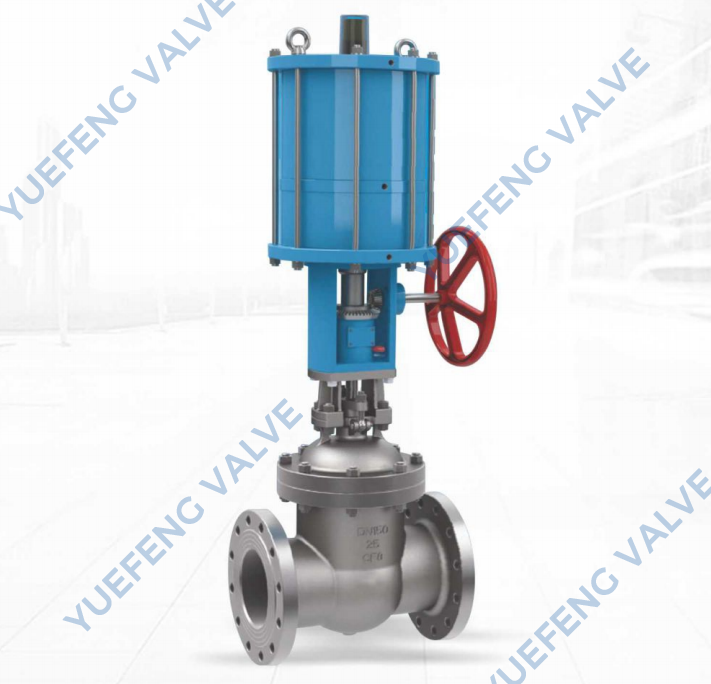
Modern industrial processes frequently push beyond standard limits, requiring engineered solutions. For example, integrating automation into critical pipelines is a major focus for modern plant safety. Engineers must ensure that adding a fast-acting pneumatic actuator does not compromise the stem tolerances or the pressure boundary. By exploring advanced solutions like an automated ASME B16.34 gate valve equipped with live-loaded packing and WCB carbon steel bodies, facilities can achieve rapid emergency flow isolation. These setups maintain strict adherence to heavy-duty mechanical ratings, ensuring seamless operation without sacrificing regulatory compliance.
One of the most expensive mistakes in procurement is over-specifying or under-specifying due to a lack of standard comprehension. Imagine a scenario where a buyer demands a heavy-duty petroleum valve for a low-hazard water line. This results in unnecessary capital expenditure due to sheer weight and excess material costs. Alternatively, specifying a lightweight unit built only to ASME minimums for a severe-service catalytic cracker will inevitably lead to rapid erosion, dangerous leaks, and unscheduled plant shutdowns. Specifications must be precisely aligned with your Piping and Instrumentation Diagram requirements.
Total Cost of Ownership is heavily influenced by the frameworks chosen during the front-end engineering phase. A fully compliant unit featuring a robust corrosion allowance will offer a significantly longer operational lifecycle in harsh environments before requiring maintenance. Because physical dimensions are standardized, sourcing replacement parts like stems or packing rings becomes a streamlined process. This drastically reduces inventory costs over a twenty-year plant lifecycle.
To execute a flawless procurement strategy, engineering teams require access to transparent, highly detailed technical documentation. Relying on basic marketing brochures is entirely insufficient when safety is on the line. Procurement specialists must source equipment from manufacturers that provide comprehensive data sheets explicitly detailing compliance with industrial gate valve standards. Ensure your vendor supplies exact wall thicknesses, pressure-temperature curves, hydrostatic testing results, and material test reports. Accessing this level of data guarantees that every unit installed operates safely within its engineered limits.
API 600 and ASME B16.34 are not competing documents. Rather, they are complementary engineering tools that serve distinct but overlapping purposes. Using both standards simultaneously ensures high performance, structural robustness, and scientifically verified pressure containment for your critical infrastructure.
They provide proven safety in some of the toughest industrial environments globally. Always review detailed technical catalogs before making your final selection, match your process media to the correct material group, and prioritize total cost of ownership over initial purchase price. If you are ready to upgrade your pipeline safety with dual-certified, severe-service flow control solutions, consult with the technical engineering team at GWV Valve to guarantee your next procurement strategy meets all operational and regulatory requirements.
Yes. In fact, it is highly common and often required in the petrochemical industry. A unit can be physically designed and dimensioned according to the strict structural requirements of API 600, which dictates wall thickness, stem diameter, and wedge design. Simultaneously, its maximum allowable operating pressure at various temperatures is certified and rated according to the material tables found in ASME B16.34.
API 600 is notably stricter and highly conservative regarding wall thickness. Because it is a dedicated product standard written specifically for the heavy-duty demands of the oil and gas industry, it mandates a built-in corrosion allowance. ASME B16.34, being a general pressure-boundary code for multiple valve types, calculates minimum wall thickness based purely on pressure containment formulas, generally resulting in a thinner wall.
It depends entirely on your industry and specific process application. In downstream oil and gas, refining, and severe service chemical processing, specifying both is an engineering best practice to ensure maximum design robustness and certified pressure safety. For general industrial applications, water distribution, or low-risk utility lines, specifying only ASME B16.34 is usually sufficient and more economical.
Both standards contribute to interchangeability but in different ways. API 600 dictates specific internal and external design parameters, ensuring that a product from one manufacturer has similar physical characteristics to another. ASME B16.34, often used in conjunction with ASME B16.10 for face-to-face dimensions, ensures that the overall length and flange connections match. This allows maintenance teams to swap out equipment in the piping system without needing to cut or weld new pipe sections.
Using a valve built strictly to ASME B16.34 minimums in an application requiring API 600 robustness will likely lead to premature failure. Without the mandatory corrosion allowance, thicker stem diameters, and standardized hardfaced trims required by the petroleum standard, the lighter-duty valve will suffer from rapid internal erosion, potential stem shearing under high torque, and eventual pressure boundary leaks in severe service environments.
ASME B16.34 primarily dictates the non-destructive examination of the pressure-containing castings, such as radiography or ultrasonic testing, to verify material integrity. It does not dictate the final pressure testing of the assembled unit. Conversely, API standards typically work in conjunction with API 598, which mandates rigorous physical hydrostatic and pneumatic pressure testing of the fully assembled shell and valve seats to guarantee zero leakage before the equipment leaves the manufacturing facility.


