

close
Choose Your Site
Global
Social Media
Views: 0 Author: Site Editor Publish Time: 2026-10-01 Origin: Site


Ever stared at a brass or stainless steel valve in the middle of a bustling plant, flashlight in hand, wondering about those stamped letters? You are certainly not alone. Misreading these seemingly cryptic marks causes catastrophic leaks, regulatory fines, and costly operational downtime. Choosing the wrong pressure limit is a dangerous, yet surprisingly common, mistake on the factory floor.
In this comprehensive guide, you will learn the exact meaning of CWP and how to decode other common markings. Whether you are sourcing a standard water shutoff or a heavy-duty flanged unit, understanding your industrial ball valve pressure rating is the absolute first step toward engineering a safe and efficient piping network.
CWP Meaning Defined: CWP stands for Cold Working Pressure. This metric indicates the absolute maximum pressure a valve can safely handle at standard ambient temperatures, typically ranging from -20°F to 100°F, or -29°C to 38°C.
Temperature Matters: Fluid control is heavily dependent on thermodynamics. As the temperature of the media running through the valve increases beyond the ambient threshold, the maximum safe working pressure exponentially decreases.
CWP vs. Other Ratings: While CWP is often used interchangeably with WOG, which means Water, Oil, and Gas, in industrial settings, it differs significantly from WSP, meaning Working Steam Pressure. Never use a CWP rating to gauge a capacity for steam applications.
Class Ratings are Different: A standard ANSI Class 150 unit does not mean its CWP is limited to 150 psi. Its actual ambient pressure capacity is usually much higher, depending entirely on the construction material.
Proper Selection: Choosing the correct hardware requires a comprehensive analysis. You must evaluate maximum pressure spikes, operating temperature range, and media compatibility to ensure long-term safety.
To build a safe and compliant piping system, engineers and procurement managers must fully understand the core metric. CWP is an acronym for Cold Working Pressure. In industrial engineering, the word cold does not refer to freezing winter conditions. Rather, it establishes a baseline of normal ambient temperatures. Industry standards typically define this baseline as temperatures between -20°F and 100°F.
Conversely, working pressure defines the maximum continuous force that the structural body and internal soft seals can withstand under normal operating conditions. Operating within this limit ensures the unit will not experience mechanical failure, deformation, or leakage. Therefore, the CWP rating provides the absolute baseline strength of the hardware before any thermal degradation occurs.
Manufacturers ensure that critical specifications remain permanently visible on the hardware in the field. The CWP rating is typically cast, forged, or deeply stamped directly into the side of the metallic body. You will often find it located near the manufacturer logo and the material identification code, such as 316SS or WCB.
Imagine inspecting a stainless steel unit and noticing a prominent marking that reads 1000 CWP. This visual indicator translates directly to a maximum safe operating pressure of 1,000 PSI, provided the internal media remains at or below 100°F. If the marking is obscured by paint or missing entirely, the hardware should never be installed in high-pressure environments until its specifications are verified through official documentation.
The primary function of this rating is to prevent catastrophic system failures. Industrial piping systems frequently transport hazardous, corrosive, or highly pressurized media. Exceeding the specified pressure threshold severely compromises structural integrity. Over-pressurization leads to severe consequences, including internal seal blowout, stem ejection, or a complete rupture of the metal body. By strictly adhering to these limits, facility operators proactively mitigate the risk of hazardous leaks that could endanger personnel and surrounding equipment.
Recent shifts in the industrial fluid control sector reveal a massive transition toward predictive safety and smart pipeline monitoring. Driven by the escalating costs of unplanned downtime and tightening environmental regulations, modern facilities are abandoning guesswork engineering. Today, digital twin simulations and IoT pressure sensors constantly monitor pipeline health. However, these advanced digital systems still rely entirely on the physical baseline limits of the hardware. Procurement teams now enforce rigorous verification of baseline metrics like CWP before greenlighting any installation. Furthermore, the global push toward advanced chemical processing has elevated the demand for precise pressure-temperature profiling. In today highly scrutinized landscape, accurately interpreting these stamped markings is a mandatory requirement for operational survival.
Beyond immediate safety, understanding these ratings represents a major economic imperative. Utilizing properly rated hardware drastically extends the operational lifespan of the entire piping network. When a unit operates comfortably within its designated pressure limits, it experiences significantly less mechanical stress. Consequently, this reduces the frequency of unexpected maintenance, prevents costly operational downtime, and avoids premature wear on delicate internal components like PTFE or PEEK seats. Proper pressure management ultimately yields a much higher return on investment for your industrial infrastructure.
To clarify the confusing alphabet soup of pipeline markings, engineers rely on standardized definitions. Below is a core comparison table breaking down the critical differences between the most common stamps found on factory floors.
Rating Acronym | Meaning | Application Scope | Temperature Limit |
|---|---|---|---|
CWP | Cold Working Pressure | Standard liquids and inert gases | Ambient, up to 100°F |
WOG | Water, Oil, Gas | Legacy term identical to CWP. Gas means inert gas only. | Ambient, up to 100°F |
WSP | Working Steam Pressure | Active, high-temperature steam lines | High heat, often 300°F+ depending on seals |
When sourcing pipeline components, you will frequently encounter the acronym WOG alongside, or sometimes replacing, CWP. WOG is an older legacy term. For all practical engineering purposes, WOG essentially means the exact same thing as CWP. Both acronyms denote the maximum pressure capacity at ambient cold temperatures.
However, a critical distinction must be made regarding the gas in WOG. In this specific context, gas refers strictly to non-combustible, inert gases flowing at ambient temperatures, such as compressed air, nitrogen, or argon. It does not automatically certify the hardware for highly flammable or explosive media like natural gas or propane. Combustible gas applications require distinct regulatory certifications regardless of the WOG or CWP rating stamped on the side.
Perhaps the most dangerous mistake a technician can make is confusing CWP with WSP. WSP stands for Working Steam Pressure, occasionally marked as SWP for Steam Working Pressure. This specific rating applies exclusively to high-temperature steam applications.
The WSP rating is always significantly lower than the CWP rating on the exact same unit. This discrepancy exists because steam carries intense thermal energy. Extreme heat degrades the structural integrity of the soft Teflon seals, making them highly susceptible to pressure blowouts. For example, a heavy-duty industrial unit might proudly display a 600 CWP marking, but its WSP rating might top out at only 150 PSI. Using the ambient rating to calculate steam capacity will inevitably lead to immediate and catastrophic failure.
In mechanical engineering, pressure and temperature are inextricably linked. The CWP meaning is strictly conditional; it applies exclusively to the cold baseline. To understand how a unit performs outside of this ambient window, engineers rely heavily on the Pressure-Temperature Curve.
The curve is a graphical representation provided by manufacturers illustrating the inverse relationship between heat and pressure capacity. Once the temperature of the internal media exceeds the 100°F threshold, the pressure-holding capability begins to plummet. As the heat rises, the metallic body expands slightly. More importantly, the internal soft materials begin to soften, drastically reducing the overall safe working pressure.
While a robust metal body can handle extreme heat, the soft parts act as the true limiting factors. The seats, which are the rings that create a watertight seal against the spherical core, are typically machined from polymers like PTFE, RTFE, or PEEK.
Standard virgin PTFE seats offer excellent sealing capabilities and easily support high ambient ratings at room temperature. Nevertheless, PTFE begins to lose its mechanical strength rapidly as temperatures approach 300°F, and it can fail completely above 400°F. In contrast, PEEK materials handle higher thermal loads but may require higher operating torques. If your application involves elevated temperatures, you cannot rely on the baseline rating. Instead, you must consult the manufacturer curve for the specific seat material to pinpoint the derated pressure limit.
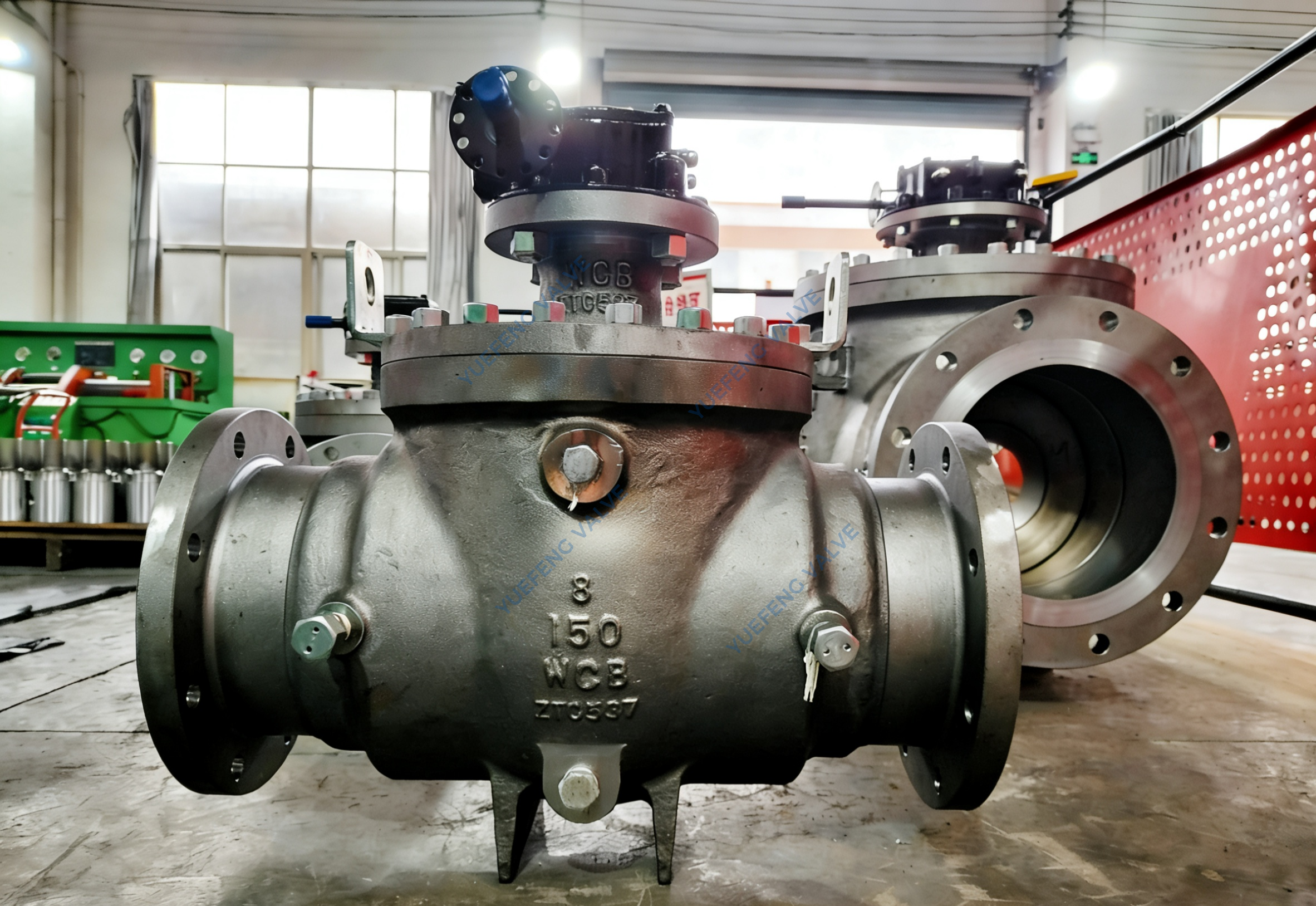
A frequent source of confusion in pipeline design involves the terminology surrounding flanged industrial units. It is a common, yet entirely incorrect, assumption that a 150 lb ball valve possesses a maximum CWP of 150 PSI. Specifically, in heavy-duty applications utilizing top-mounted designs, this rating means something entirely different.
In industrial terminology, 150 lb, or Class 150, does not represent the literal pressure limit in pounds per square inch. Rather, it refers to the ANSI and ASME B16.34 standardized flange rating system. This classification system standardizes the physical dimensions, bolting patterns, and baseline pressure-temperature ratings for flanged fittings, ensuring uniformity across global infrastructure projects.
To determine the actual ambient capacity of an ANSI-classed unit, you must cross-reference the class rating with the specific material of the body at an ambient temperature of 100°F. The actual pressure capacity is almost always higher than the class number suggests.
For instance, according to ASME B16.34 standards, a top-mounted carbon steel WCB Class 150 unit actually handles a CWP of approximately 285 PSI at 100°F. Meanwhile, a stainless steel CF8M Class 150 unit features a slightly lower capacity of 275 PSI at the same temperature. Grasping this translation is vital for procurement. It prevents engineers from over-specifying and overspending on Class 300 units when a Class 150 unit provides more than enough ambient pressure capacity for their specific operational needs.
Selecting the perfect CWP-rated ball valve requires translating abstract specs into actionable engineering decisions. Follow these fundamental steps to guarantee system longevity.
Determine Maximum System Pressure and Spikes: First, carefully calculate your normal system operating pressure, as this baseline serves as the foundation for proper selection. However, static pressure only tells half the story. Engineers must look beyond standard daily fluid conditions to account for sudden dynamic surges. Phenomena such as water hammer, which is a violent shockwave caused by the sudden closing of a pipeline, create instantaneous pressure spikes that far exceed normal operating levels. Your chosen hardware must feature a rating high enough to absorb these transient spikes without sustaining damage. Adding a twenty percent safety buffer is standard engineering practice to protect against unforeseen operational anomalies.
Identify the Operating Temperature Range: Because of the inverse relationship between pressure and temperature, identifying your maximum operating temperature is critical. If your system operates consistently at 80°F, you can select hardware based directly on its stamped CWP. In contrast, if your media consistently runs at 250°F, you must adjust your calculations. Heat causes structural materials to expand and lose tensile strength. Always consult the specific Pressure-Temperature chart to ensure the derated pressure capacity at elevated temperatures still comfortably exceeds your system maximum requirements.
Select the Right Valve Material: Body materials exhibit completely different standard operational limits. Brass is exceptionally common for lower-pressure commercial water systems, offering excellent machinability but lacking extreme high-pressure structural strength. Carbon Steel, such as WCB, handles higher industrial pressures safely and effectively, making it the standard choice for heavy-duty petroleum lines. Stainless Steel offers a premium blend of high-pressure capacity and unmatched corrosion resistance, ideal for harsh chemical environments. Compare these materials based on your specific piping needs to ensure the structural housing matches your calculated demands.
Verify Media Compatibility: Even if a unit possesses an adequate pressure threshold, it will fail prematurely if the construction materials are incompatible with the media. Chemical reactions can rapidly degrade internal components over time, severely lowering the effective safe pressure rating. Corrosion eats away at the structural walls, while abrasive media physically wears down the internal spherical mechanism, leading to internal leaks. Choosing properly rated equipment requires a comprehensive analysis of chemical compatibility charts. Never compromise on material matching to save on initial procurement costs; long-term reliability depends entirely on this synergy.
Ignoring the crucial temperature variable is a remarkably dangerous mistake. Many novice engineers focus solely on the stamped pressure number, falsely assuming a 1000 CWP unit can safely handle 1000 PSI at 300°F. This miscalculation inevitably leads to immediate and catastrophic blowouts. The rating strictly applies to cold ambient conditions. Failing to calculate the required derating factor compromises the entire system. Always keep the official P-T chart readily available onsite, and train your maintenance staff to respect this critical thermodynamic relationship.
As previously detailed, using an ambient rating when designing an active steam system is a critical safety violation. Steam degrades soft seals much faster than standard cold water due to latent heat penetration. A high ambient rating does not guarantee a high steam capacity. If a unit lacks a designated steam rating, do not use it for that purpose. Using unrated components for steam violates fundamental industrial safety protocols and can lead to severe burns or equipment destruction.
Your entire piping system is only as strong as its weakest component. You might procure a rugged 2000 CWP industrial unit, but if the adjoining pipes, threaded fittings, or flange gaskets are only rated for 150 PSI, your system cannot safely operate above 150 PSI. Pressure will always find the weakest point to escape. Engineers must conduct comprehensive audits to ensure every single component in the fluid path meets or exceeds the required pressure rating, guaranteeing total system integrity.
Understanding the true meaning of Cold Working Pressure is absolutely vital for system safety and operational efficiency. This metric determines the baseline strength of industrial hardware before thermal dynamics come into play. Temperature fluctuations, media compatibility, and ANSI class ratings all deeply influence your final engineering selection.
Knowing exactly how to read and apply your pressure ratings ensures strict regulatory compliance. It creates a much safer work environment and guarantees a longer-lasting fluid control system. Avoid the guesswork, consult the P-T curves, and always partner with professional experts. To find the perfect industrial solution tailored to your specific pipeline demands, explore the comprehensive catalog at GWV Valve and secure your infrastructure today.
It means the unit is engineered to safely handle a maximum internal pressure of 600 PSI. This specific rating applies exclusively at cold or ambient operating temperatures, which are typically defined as being between -20°F and 100°F. Exceeding this pressure limit at these temperatures will cause mechanical failure. It is important to note that this rating does not apply to extreme heat or steam applications.
Yes, CWP and WOG generally mean the exact same thing in practical engineering terms. Both indicate the maximum pressure rating at ambient temperatures. WOG simply stands for Water, Oil, and Gas. Older hardware often features the WOG marking, while newer industrial components tend to use the standardized CWP designation. Neither rating applies to high-temperature steam or highly corrosive chemicals.
No, you cannot use the standard ambient rating for active steam applications. You must look for the specific WSP marking instead. The WSP rating is significantly lower due to the intense heat of steam, which rapidly degrades standard polymer seals. Steam requires specialized high-temperature seats, such as carbon or metal-to-metal seals, to maintain structural integrity safely.
No, the 150 lb designation refers to the ANSI Class 150 standard, which dictates the structural dimensions of the connecting flanges, not the literal internal fluid pressure limit. The actual ambient capacity of a carbon steel Class 150 unit is roughly 285 PSI at a cold 100°F. Engineers must translate these class ratings using standard ASME charts to determine the true safe operating pressure.
The safe working pressure decreases rapidly as the temperature increases. Heat softens the internal seals and causes subtle thermal expansion in the metal body, drastically lowering the maximum pressure threshold. You must consult the official Pressure-Temperature rating chart from the manufacturer to find the safe, derated operating pressure at elevated temperatures to prevent dangerous industrial leaks.
Manufacturers verify this rating through rigorous hydrostatic testing. During this process, the assembled unit is filled with water at ambient temperature and pressurized to a level typically 1.5 times higher than its stated CWP rating. The hardware must hold this extreme pressure for a specified duration without any visible leakage through the shell or the internal seats, ensuring it meets strict ASME and API safety standards before it ever leaves the factory.
Yes, the physical size of the pipeline component directly impacts its pressure-holding capabilities. Larger units possess more internal surface area, meaning the internal fluid exerts a much greater total force against the body walls and seats. Consequently, to maintain high CWP ratings in larger diameters, manufacturers must significantly increase the wall thickness and utilize heavier, reinforced seat designs. This is why a 2-inch unit might easily achieve a 2000 CWP rating, while an 8-inch unit made of the exact same material might be limited to a lower pressure class.


