

close
Choose Your Site
Global
Social Media
Views: 0 Author: Site Editor Publish Time: 2026-04-20 Origin: Site


Fundamentally, a Butterfly Valve is a quarter-turn rotational motion device. You use it to quickly stop, regulate, or start fluid flow across a piping system. Today, engineers recognize these devices as absolute industry standards. They deliver exceptional space-saving advantages and highly cost-effective flow control. However, specifying the wrong offset or body style introduces severe operational risks. Poor selection can easily lead to catastrophic pressure drops, sudden leakage, or immediate compliance failures. You must understand the precise operating conditions of your facility before installation. This guide breaks down the mechanical realities, performance tiers, and selection frameworks. You will gain the knowledge necessary to confidently specify a Butterfly Valve for commercial or heavy industrial applications.
Cost vs. Scale: Butterfly valves become the most cost-effective and space-efficient choice for pipe diameters exceeding 4 inches, weighing significantly less than equivalent ball or gate valves.
Performance Tiers: Selection relies heavily on eccentricity (offset). Concentric designs handle basic water systems, while Triple Offset Valves (TOV) are required for extreme temperatures, high pressures, and bubble-tight shut-offs.
Installation Reality: Improper installation (e.g., failing to account for disc clearance in the fully open position) is a leading cause of startup failure and flange damage.
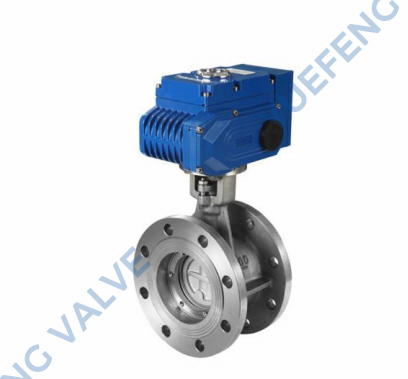
The quarter-turn mechanism defines how this equipment operates. A simple 90-degree rotation moves the unit from fully closed to fully open. This short mechanical arc ensures exceptionally rapid actuation capabilities. Compared to multi-turn devices like traditional gate valves, actuation takes mere seconds. We see this operational speed as a major advantage during emergency shut-offs.
You can understand the architecture by examining four essential modules. We break them down as follows:
Body: The robust outer casing housing the internal components. It fits securely between your existing pipe flanges.
Disc: The central flow-control element. It rotates inside the body to permit or block media passage.
Stem: The heavy-duty structural shaft. It connects the internal disc to the external manual lever or automated actuator.
Seat: The internal perimeter ring. It provides the crucial sealing surface for the disc during closure.
Next, you must consider the pressure drop trade-off. It represents an inherent mechanical reality of the design. Even when you rotate it fully open, the disc remains directly inside the fluid flow path. Because of this permanent central position, a Butterfly Valve will always induce a persistent pressure drop. You cannot avoid this flow restriction entirely. It is the necessary compromise for such a compact physical footprint.
Fortunately, the overall flow characteristics offer excellent compensation. You get a "near-linear" flow response during regular operation. For instance, opening the disc slightly to 60% roughly equates to passing 60% of the total flow volume. This proportional relationship makes them highly viable for precision throttling service. You do not just have to restrict them to basic on/off service scenarios.
Engineers often debate which device perfectly suits a specific pipeline design. We can frame this shortlisting logic around pipe size, component weight, and operational speed. You must evaluate these constraints before drafting a purchase order.
First, we evaluate them versus ball valves. We look strictly at size thresholds. Once your pipe diameter exceeds 4 inches, ball valves become prohibitively heavy. They also carry massive material costs due to their bulky housings. Alternatively, butterfly models offer a much slimmer face-to-face profile. They strip away excess casting metal. This design choice results in dramatically lower material costs for large-scale projects.
Next, we weigh them against gate valves. Operational speed and spatial footprint matter greatly here. Gate valves require high vertical clearance to pull the internal gate upward. Moreover, they are notoriously prone to accumulating sediment in their bottom tracks. This trapped sediment prevents a complete mechanical closure over time. Conversely, a butterfly design actuates significantly faster. It completely avoids bottom track sediment issues and fits into highly restricted spatial footprints.
Finally, we assess them against globe valves. Globe designs traditionally offer superior control precision for intense throttling. However, they weigh an absolute ton and restrict fluid heavily. If you evaluate control precision versus overall weight, the modern narrative shifts. You can pair a high-quality Butterfly Valve with a smart, digital actuator. This combination achieves equivalent linear flow control. Yet, it does so at less than half the physical weight and height of a globe counterpart.
Valve Type | Primary Strengths | Notable Drawbacks | Space Requirement |
|---|---|---|---|
Butterfly | Cost-effective for large pipes (>4"), fast quarter-turn shut-off. | Inherent pressure drop, central disc obstruction. | Minimal (Highly Compact) |
Ball | Zero pressure drop, full port unrestricted flow. | Prohibitively heavy and expensive in large diameters. | Moderate |
Gate | Unrestricted straight-through flow, good for isolation. | Slow multi-turn actuation, prone to sediment blockages. | High (Requires Vertical Clearance) |
Globe | Exceptional high-pressure throttling precision. | Extremely heavy, induces massive pressure drop. | High (Bulky Casting) |
Your specific system parameters dictate the correct performance tier. Mechanical selection relies almost entirely on eccentricity. Industry professionals commonly refer to this as the offset geometry.
Zero Offset (Concentric)
In this fundamental tier, the stem runs directly through the exact centerline of the disc. The design relies entirely on rubber or elastomer seat friction. When the disc turns, it aggressively squishes against the rubber to seal the pipe. You will specify concentric units primarily for low-pressure, low-temperature environments. General municipal water systems and standard wastewater applications rely on them heavily.
Double Offset (High Performance)
Engineers developed the double offset architecture for much tougher industrial tasks. Here, the stem sits offset behind the disc. The manufacturer also shifts it to one side slightly. This dual structural shift creates a unique mechanical "cam effect" during rotation. The cam effect physically pulls the disc away from the soft seat early in its movement. This separation dramatically reduces rubbing and friction. Reduced friction directly extends the operational lifespan of the unit. They comfortably handle medium-to-high fluid pressures up to roughly 1,480 psi. You frequently see them deployed across large-scale commercial HVAC systems.
Triple Offset (TOV)
This tier introduces elite high-performance engineering. The design adds a third angular or conical offset directly to the seating surface. This third geometric shift achieves an absolute zero-friction seating mechanism. The metal disc only touches the metal seat at the exact microsecond of complete closure. You must use a Triple Offset Butterfly Valve for harsh industrial environments. They handle extreme operating temperatures up to 1,400°F effortlessly. Facilities processing cryogenic liquid natural gas (LNG) require them exclusively. Business leaders authorize them because they guarantee API 598 bidirectional bubble-tight sealing standards under extreme stress.
You must match the exterior casing format to your facility's daily maintenance protocol. We categorize exterior body styles into wafer, lug, and niche specialty formats.
Wafer Style
This version is sandwiched tightly between two standard pipe flanges. Long bolts span the entire open distance across both flanges to clamp it firmly in place. It offers the lowest initial purchase cost and the lightest overall weight. However, it carries a severe maintenance penalty. You cannot disconnect one side of the piping for repairs. If you remove the bolts, the entire unit falls out. You must depressurize and drain the entire line completely before loosening the hardware.
Lug Style
Lug bodies feature distinctly different exteriors. The casing has threaded tapped lugs protruding outward from the main ring. These heavy lugs allow you to bolt the unit to each pipeline flange independently. This mechanical independence enables true "dead-end service." You can safely remove downstream piping while keeping the upstream section fully under pressure. You must watch out for pressure rating reductions, however. Hardware ratings typically drop significantly in dead-end scenarios. A unit originally rated for 150 psi might suddenly drop to 75 psi when used this way.
Alternative Connections
Certain specialized industries demand unique pipeline integration profiles. Double-flanged designs feature full flanges cast directly onto the body. They support ultra-large scale municipal water networks requiring heavy structural rigidity. Alternatively, food and beverage producers use sanitary, quick-clamp styles. These hygienic connections ensure rapid manual dismantling. Daily cleaning compliance requires these tool-free removal options.
Total cost of ownership extends far beyond the initial purchase order. Poor installation practices or missing clearance calculations will destroy new hardware rapidly.
Pre-Installation Clearance
Failing to calculate interior disc sweep represents a critical engineering oversight. When fully open, the metal disc actually extends beyond the central valve body. If you connect it directly adjacent to a pump or a check valve, the rotating disc will crash into the adjacent equipment. You must install metal spacers or pipe spools to prevent this catastrophic collision.
Installation SOPs
Follow rigorous standard operating procedures during pipeline integration to prevent startup failures. We highly recommend executing the following steps:
Scrub and thoroughly prepare the adjacent flange faces. You must remove all welding slag, dirt, and pipe rust.
Align the opposing pipe flanges perfectly before inserting the body into the gap.
Hand-tighten the initial staging bolts to hold the unit securely in place.
Apply a strict "star" or "cross-pattern" torqueing sequence for final wrench tightening.
This cross-pattern sequence is absolutely mandatory. It prevents uneven seat compression across the rubber face. Uneven compression causes immediate leakage upon system pressurization.
Actuation & Automation Integration
Manual hand-levers work perfectly fine for small pipe diameters. But modern production facilities upgrade heavily to gear operators, pneumatic cylinders, or electric actuators. Brushless DC electric actuators integrate incredibly smoothly into modern building automation platforms. They offer native BACnet or Modbus communication compatibility. This digital integration provides energy-saving torque management and immediate remote diagnostics.
Certification Benchmarks
You must verify safety standards based on your specific sector before purchasing. Look closely for AWWA C504 and NSF/ANSI 61 certifications. These specific benchmarks guarantee municipal drinking water safety and prevent toxic leaching. For petrochemical applications, demand API certifications. They ensure explosive environment safety and reliable emergency isolation.
Specifying the right flow control equipment requires a careful engineering balance. You must constantly weigh the initial cost savings of a compact design against strict operational demands. A facility's specific maximum pressure limits, extreme temperature ranges, and routine maintenance access requirements dictate the final hardware choice.
Map out your exact media type and temperature range before consulting any vendor catalog.
Determine your maximum line pressure to select the proper offset tier and avoid blowout risks.
Assess your maintenance protocols to choose between a wafer or lug style casing.
Consult a specialized engineer to size your actuator correctly, preventing harmful mechanical over-torquing.
A: Yes, they perform exceptionally well for throttling. You primarily use them in the 30° to 70° open range to regulate flow. However, you must avoid extreme throttling near the fully closed position, as high fluid velocity can cause severe cavitation and damage the seat.
A: Leaks stem from several common issues. Uneven bolt torque during initial installation compresses the seat incorrectly. Elastomer degradation occurs quickly if you use media incompatible with the rubber material. Additionally, deploying a basic concentric unit in a high-pressure scenario frequently forces fluid past the seal.
A: Yes, it permanently restricts flow to a small degree. Because the central disc and stem remain directly in the flow path even when fully open, they induce a minor but persistent pressure drop. This differs completely from full-port ball valves, which offer zero restriction.
A: You base this choice entirely on media properties and temperature. Choose a resilient elastomer seat for clean, lower-temperature fluids like basic water or air. Choose a hardened metal seat for high-temperature steam, abrasive slurries, or highly corrosive industrial chemicals that melt or destroy rubber.


