

close
Choose Your Site
Global
Social Media
Views: 0 Author: Site Editor Publish Time: 2026-10-31 Origin: Site


Are your automated valves quietly draining your operational budget? Plant managers constantly battle high energy consumption and the hidden costs of oversized equipment on the factory floor. Many pipelines suffer from traditional high-friction valves. These units demand massive amounts of power just to cycle open and closed.
In automated fluid networks, the rotational force required to operate a valve dictates the size, cost, and power draw of the actuator. When friction is high, capital expenditure skyrockets. The ultimate solution to optimizing these automated processes lies in minimizing internal resistance. Specialized low-torque designs offer seamless integration and dramatically reduced equipment costs. They also provide long-term reliability when paired with advanced actuation technologies.
Cost Efficiency: Reduced turning resistance allows facilities to specify smaller actuators, significantly lowering initial setup costs.
Design Superiority: A trunnion-mounted structure naturally minimizes operating torque by absorbing line pressure, making it the perfect candidate for high-pressure automated systems.
Perfect Synergy: Pairing a friction-optimized valve with a pneumatic actuation system ensures rapid and highly energy-efficient fluid control.
Extended Lifespan: Less internal friction translates to reduced wear and tear on both the sealing surfaces and the actuator gears.
Industrial automation is rapidly shifting toward sustainable and low-emission setups. Facilities now face strict regulatory mandates to reduce their carbon footprints and optimize power usage. Heavy and high-power actuators are becoming obsolete. Instead, engineers prioritize IoT-compatible smart sensors paired with friction-optimized fluid control. This transition reduces baseline energy consumption and aligns with global green manufacturing standards. When a plant cycles automated valves thousands of times daily, the cumulative electricity or compressed air saved by utilizing low-torque designs is staggering.
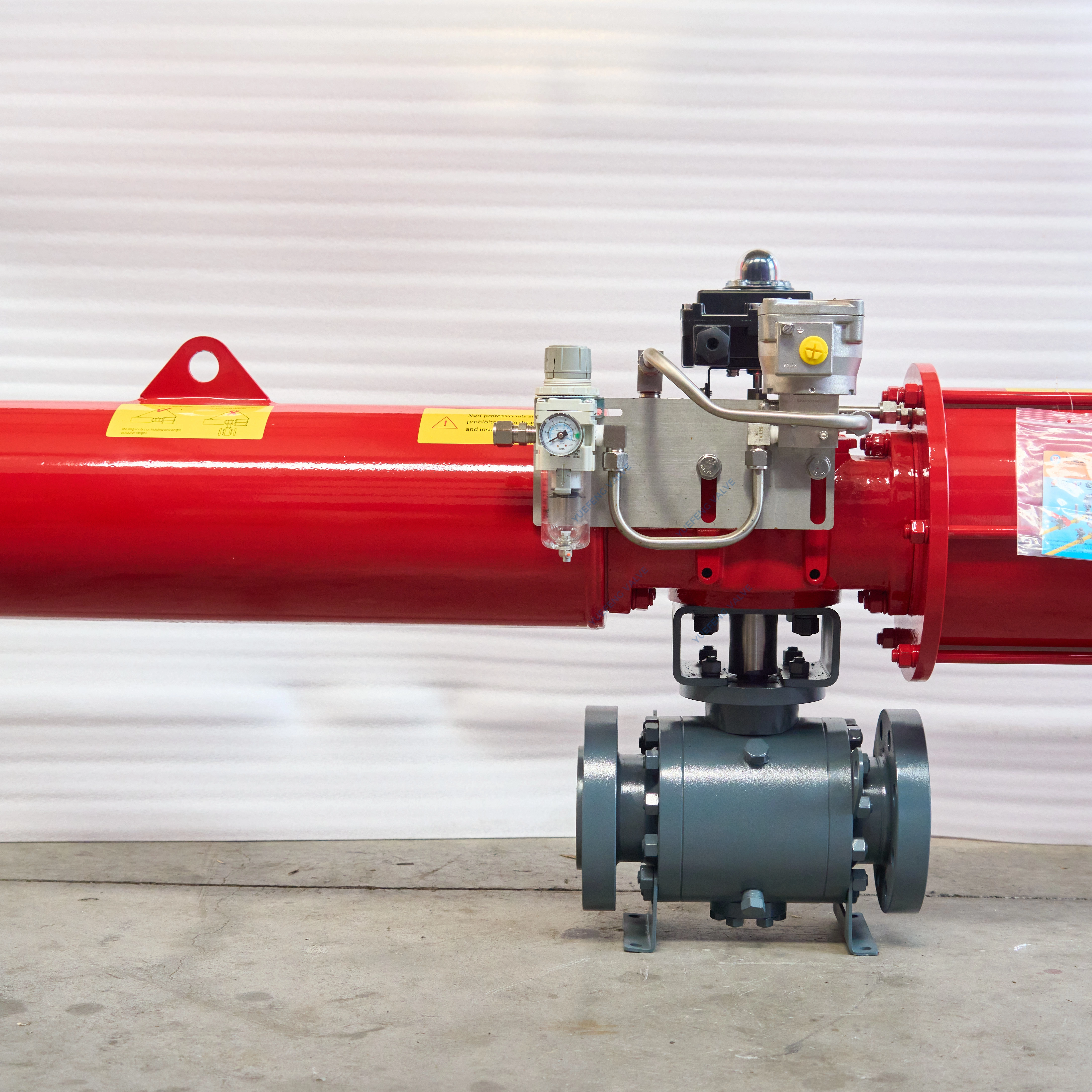
To grasp why automation efficiency varies so wildly, we must first define valve torque. Simply put, it is the rotational force required to cycle a quarter-turn valve from a fully open to a fully closed position. Imagine trying to push open a heavy rusted steel door. The physical resistance you encounter is exactly what an actuator experiences when fighting against a high-friction valve seat.
Several dynamic factors influence this turning resistance. Fluid pressure plays a massive role. High differential pressure physically forces the ball into the downstream seat, creating a tight but high-friction seal. Furthermore, media characteristics matter deeply. Viscous fluids like crude oil or abrasive slurries introduce severe drag on internal components. Finally, the friction coefficients of the seat materials themselves determine the baseline resistance.
To combat these mechanical hurdles, a high-quality low torque ball valve is specifically engineered to minimize friction points. Through advanced surface treatments and precision-machined seat profiles, these valves guarantee that the actuator spends its energy on actual movement rather than fighting internal drag.
Traditional floating ball valves rely entirely on upstream line pressure to push the ball against the downstream seat to create a seal. While effective for manual low-pressure applications, this design becomes a liability in automation. As pipeline pressure spikes, the ball is wedged so tightly against the seat that the torque requirements skyrocket. Engineers are then forced to specify massive actuators to overcome the friction.
In stark contrast, a trunnion mounted ball valve introduces a distinct mechanical advantage. Instead of floating freely, the ball is securely anchored at both the top and bottom by robust shafts. Because the ball is fixed in place, it absorbs the intense fluid pressure directly into the valve body rather than transferring it to the seats. Industrial trunnion valves featuring a two-piece or three-piece split body design ensure that the ball rotates freely with minimal surface friction.
Feature | Floating Ball Valve | Trunnion Mounted Ball Valve |
|---|---|---|
Pressure Handling | Best for low to medium pressure lines. | Excels in high-pressure and severe service environments. |
Torque Profile | Torque increases exponentially with line pressure. | Maintains a consistent and low torque curve under varying pressures. |
Actuator Size Required | Requires oversized actuators for high-pressure compensation. | Allows for precise sizing with smaller and more cost-effective actuators. |
Ideal Application | Basic water distribution and low-pressure chemical feeds. | Oil and gas pipelines, automated pumping stations, and ESD systems. |
There is a direct correlation between low turning resistance and actuator sizing. When a valve turns effortlessly, you can purchase significantly smaller actuators. This creates a cascade of financial benefits including lower initial capital expenditure, lighter mounting brackets, and reduced structural strain on the piping infrastructure.
Lower mechanical resistance inherently allows the valve to reach its target position much faster. Picture a volatile chemical processing plant. During an emergency shutdown scenario, a split-second delay can lead to catastrophic failure. A friction-optimized valve ensures that safety protocols are executed instantly and decisively.
High torque forces brutally strain the valve stem, the internal actuator gears, and the seating surfaces. By intentionally lowering the operating friction, you naturally extend the operational lifespan of all moving parts. This leads to fewer maintenance interventions and a vastly improved return on investment.
Despite the rise of electric motors, pneumatic systems remain the undisputed heavyweights of industrial automation. They are celebrated for their unparalleled speed, rugged simplicity, and inherent fail-safe capabilities like spring-return mechanisms that close automatically upon power loss.
When you pair a low-resistance valve with a pneumatic actuated ball valve setup, the synergy is remarkable. A lower torque requirement prevents sudden air pressure drops across the facility pneumatic network. Specifically, incorporating a rack and pinion pneumatic actuator with a hard anodized aluminum body provides a steady linear torque output. This perfectly complements standard low-torque applications while allowing plants to utilize smaller air compressors.
Historically, automation engineers frequently defaulted to butterfly valves due to their inherently lightweight construction and low turning resistance. For basic water distribution or low-pressure air systems, they are a highly economical choice.
However, butterfly valves possess distinct limitations. They notoriously struggle with high-pressure drops, often fail to provide strict bubble-tight shut-offs, and their internal discs obstruct pipeline pigging operations. The low-torque ball valve elegantly bridges this gap. It grants engineers the superior unobstructed flow capacity of a full-bore port combined with an operating torque that rivals even the most efficient butterfly designs.
Before retrofitting a manual valve with an automated actuator, you must meticulously assess the breakaway torque. Imagine a valve sitting idle in a pipeline for six months. The static friction between the ball and the seat will be significantly higher than its standard running torque. If you size the actuator based solely on dynamic friction, the valve will inevitably stall.
To prevent this, industry standards dictate including a safety factor. Always add a 20 to 30 percent safety margin to the rated running torque when selecting your actuator. In addition, carefully evaluate the operating environment. Extreme sub-zero temperatures can harden soft polymer seats, while corrosive coastal air can degrade external stems.
Selecting the optimal valve requires a careful technical evaluation of your specific process conditions. Material selection is paramount. Carbon steel bodies like WCB offer excellent durability for standard environments. Stainless steel options such as CF8 or CF8M are mandatory for corrosive media. More importantly, seat materials like virgin PTFE provide incredibly low friction, whereas PEEK handles higher temperatures but slightly increases rotational drag.
You must also decide between flanged and welded connections. Flanged designs compliant with ASME B16.5 standards allow for rapid removal and maintenance, making them ideal for systems requiring frequent inspections. Welded connections offer permanent leak-free integrity for hazardous fluids.
Ultimately, the most crucial step is consulting with reputable manufacturers. Never guess the required torque. Demand detailed torque charts that account for differential pressure and media specific gravity to ensure flawless actuator pairing.
Automating a pipeline is a major step toward modernizing your facility. That automation is only as efficient as the valves installed within the network. The low-torque ball valve stands as the linchpin for cost-effective, highly responsive, and long-lasting industrial control. By minimizing internal friction, you ensure that your actuators remain compact, your energy bills stay low, and your maintenance intervals are extended.
Ready to upgrade your industrial control systems? Evaluate your current pipeline requirements and explore high-quality, precision-engineered solutions at GWV Valve. Whether you need a robust trunnion-mounted design to conquer high-pressure oil lines or a streamlined floating design for smaller chemical feeds, prioritizing low torque will consistently yield superior automation results.
Breakaway torque is the initial peak force required to move the valve from its fully closed or fully open resting position. This value is always higher due to the static friction between the ball and the seats, as well as potential media settling. Running torque is the lower consistent force needed to keep the ball turning smoothly mid-stroke once dynamic friction takes over. Actuators must always be sized based on the higher breakaway torque to prevent stalling.
Yes, automating an existing manual valve is entirely feasible provided the valve features an ISO 5211 direct mounting pad. This standardized pad allows for the direct attachment of industrial actuators without custom brackets. You must obtain the exact torque specifications from the original manufacturer, calculate the breakaway torque under your specific line pressure, and apply a suitable safety margin to size the new actuator correctly.
In a floating valve design, the upstream fluid pressure physically pushes the ball hard against the downstream seat, creating immense friction that the actuator must overcome. A trunnion valve solves this by mechanically anchoring the ball at the top and bottom. These anchors absorb the intense fluid pressure, preventing the ball from pressing excessively against the seats. This allows the ball to rotate freely with minimal surface friction.
An undersized actuator lacks the necessary rotational force to overcome the internal friction of the valve. Consequently, it will fail to open or close the valve fully, leading to dangerous internal leaks and compromised process control. In electric systems, continuous stalling will cause the motor to overheat and burn out rapidly. In pneumatic systems, the actuator will simply stall, which can critically compromise emergency shutdown protocols.
Extreme temperatures directly alter the physical properties of the seat materials. High heat can cause soft seats to expand, increasing the friction against the ball. Conversely, freezing temperatures harden polymers like PTFE, making them rigid and significantly spiking the breakaway torque. Engineers must always apply a temperature correction factor when sizing actuators for extreme environments.
Routine maintenance is essential for preserving low-friction performance. Regularly injecting specialized valve lubricants or sealants into the seat pockets prevents dry running. Additionally, scheduling periodic partial stroke testing keeps the internal components moving. This prevents the buildup of static friction and clears away particulate debris that might otherwise score the seating surfaces.


