
Views: 0 Author: Site Editor Publish Time: 2026-10-22 Origin: Site


Industrial fluid control systems depend entirely on the performance and structural integrity of their isolation components. When you specify a valve with incorrect engineering parameters, the results can be catastrophic. These range from hazardous fugitive emissions to unplanned facility shutdowns and severe safety incidents. For procurement managers, plant operators, and piping engineers, the challenge often lies in navigating a dense labyrinth of engineering protocols such as API, ASME, and ANSI. A common point of friction during the procurement cycle involves confusing manufacturing design standards with operational testing certifications. This resource is designed to decode the critical distinctions between ASME B16.34, API 608, and API 6D specifications. Furthermore, we will settle the widespread industry debate of API 607 vs API 608, ensuring you know exactly which specification to mandate for your upcoming pipeline transmission or petrochemical processing project.
ASME B16.34 serves as the universal baseline, dictating fundamental pressure-temperature ratings, minimum wall thicknesses, and approved metallurgy for industrial valves.
API 608 focuses on the high-cycling demands of downstream petrochemical process piping, whereas API 6D is engineered for the massive pressure differentials and long-distance transport requirements of midstream networks.
Distinguishing between design and testing is vital; API 608 dictates how a valve is built, while API 607 provides the fire-test certification to prove safety under thermal stress.
Matching the regulatory standard to specific fluid media, pressure drops, and safety protocols is the most effective way to prevent costly operational blind spots.
Before looking at specific American Petroleum Institute classifications, it is crucial to grasp the baseline rulebook that all high-tier industrial valves must satisfy. ASME B16.34, titled "Valves—Flanged, Threaded, and Welding End," serves as the universal foundation. Manufacturers cannot legally apply API monograms without first fulfilling these essential safety and structural requirements. This standard governs several non-negotiable engineering parameters. It establishes strict pressure-temperature ratings, categorizing equipment from Class 150 up to Class 4500. As internal fluid temperatures rise, the safe allowable pressure inherently decreases. To prevent vessel ruptures, the standard provides mathematical formulas to calculate the exact minimum wall thickness required for body castings or forgings. It also dictates which grades of carbon steel, austenitic stainless steel, and high-nickel alloys possess the yield strength to survive industrial use. The relationship between ASME and API is highly complementary. While both API 608 and API 6D treat ASME B16.34 as their starting line, general utility standards are often inadequate for the volatile, corrosive realities of the oil and gas sector. Consequently, API standards layer their own stringent, industry-specific structural upgrades on top of this ASME baseline.
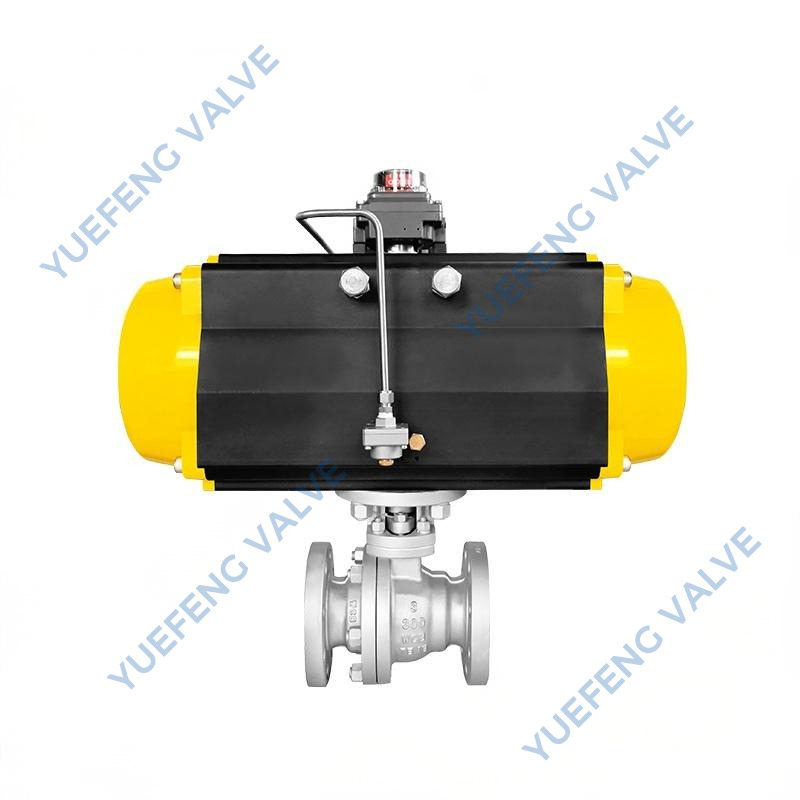
When engineers oversee downstream processing facilities, they rely heavily on the API 608 standard. This protocol governs metal-seated and soft-seated ball valves utilized primarily in general industrial, refining, and petrochemical environments. By choosing a high-quality API 608 ball valve, you ensure the acquisition of a rugged, heavy-duty component capable of enduring the relentless daily demands of complex process piping. Process lines within modern refineries represent unforgiving environments. They subject equipment to severe thermal shocks, operational stress from adjacent piping loads, and constant open-close cycling. To combat these stressors, API 608 mandates design enhancements that go beyond standard utility requirements. These valves feature thicker body walls and larger stem diameters, ensuring internal mechanisms do not deform, bind, or shear under heavy external loads. Depending on the size and pressure class, these are available in floating and trunnion-mounted configurations. In highly automated chemical plants where rapid response and tight shut-off are essential, pneumatic actuated floating designs are frequently deployed to manage continuous fluid flow.
While API 608 focuses on the tightly packed piping inside a refinery, the API 6D standard is the definitive specification for the massive infrastructure that transports energy across continents. This standard governs pipeline and piping valves deployed in the upstream extraction and midstream transportation sectors of the petroleum and natural gas industries. Cross-country transmission lines present unique physical challenges that standard process valves simply cannot handle. One critical requirement is pipeline pigging. Because lines must be cleaned and inspected using robotic devices known as pigs, API 6D pipeline ball valve designs must feature a true full bore internal diameter, allowing these devices to pass through completely unobstructed. Due to the staggering static pressures involved in long-distance transport, these valves utilize heavy-duty trunnion mounting to absorb line pressure and prevent the ball from crushing the downstream seat. Safe maintenance is another priority. Operators require absolute certainty when shutting down a segment for repairs. Therefore, these valves often incorporate Double Block and Bleed or Double Isolation and Bleed capabilities. This allows crews to bleed off trapped cavity pressure and verify zero leakage before unbolting flanges, ensuring worker safety. Looking at current industry trends, the landscape for transmission valves is evolving. The global expansion of LNG export terminals and the push toward high-pressure hydrogen blending are driving demand for equipment that can handle multi-phase flows and extreme pressure drops. As facilities age, there is also a clear shift toward smarter, automated isolation technologies that reduce human exposure in remote, high-risk locations.
The most profound distinction between these two standards lies in the installation environment. API 608 units are installed in tightly woven process manifolds where they face frequent, sometimes hourly, operational cycling and rapid temperature spikes. In contrast, API 6D units are often buried underground or installed at remote compressor stations. They may remain in the open position for months, yet they must instantly hold back massive, continuous pressure differentials when called upon to close across hundreds of miles of pipeline. Testing protocols also vary significantly between the two. While API 608 generally relies on standard API 598 hydrostatic and pneumatic tests, API 6D mandates much longer testing durations and specific evaluations like cavity relief testing. This ensures that liquid trapped inside a closed valve body does not thermally expand and rupture the casing, a scenario that is far more likely in long-distance, outdoor pipeline systems.
Feature / Requirement |
API 608 (Process) |
API 6D (Pipeline) |
|---|---|---|
Primary Industry |
Downstream, Refining |
Upstream, Midstream, Transmission |
Operation Frequency |
Frequent (daily/hourly) |
Infrequent (monthly/yearly) |
Bore Requirements |
Flexible (standard/reduced/full) |
Strictly Full Bore (for pigging) |
Maintenance Focus |
Ease of cycling/actuation |
Isolation safety (DBB/DIB) |
One of the most costly misunderstandings in procurement departments is framing the decision as a choice between API 607 and API 608. Comparing these two is a fundamental engineering error; they do not compete. Rather, they serve different purposes and operate synergistically to ensure industrial safety. The confusion stems from how standards are classified. API 608 is a manufacturing and design standard. It dictates physical dimensions, metallurgy, stem thickness, and assembly procedures. Conversely, API 607 is a fire-test certification standard. It does not instruct a manufacturer on how to construct a valve; instead, it provides a brutal testing methodology to prove that a fully assembled valve will not leak dangerous amounts of fluid during a catastrophic fire. In hazardous environments, you will often purchase an API 608 valve that has been independently fire-tested to achieve API 607 fire-safe ball valve certification.
Officially titled "Fire Test for Quarter-turn Valves and Valves Equipped with Nonmetallic Seats," API 607 is a rigorous protocol. In industries processing volatile hydrocarbons, a minor leak during a localized fire can instantly escalate into a plant-level explosion. To prevent this, an API 607 certified valve employs a dual-seat architecture. When the primary soft seat burns away, internal line pressure pushes the floating ball downstream. The ball then slams against a secondary, raised metal lip machined directly into the steel valve body. This metal-to-metal contact creates an emergency seal. While not perfectly bubble-tight, it reduces leakage to a strictly controlled limit. During the certification process, the unit is engulfed in 1000°C flames for 30 minutes, followed by a rapid cold-water quench to simulate fire hoses. Only units that maintain their integrity earn the badge.
Selecting the correct engineering standard is a critical financial and safety decision. By following a systematic framework, you ensure regulatory compliance and maximize the longevity of your assets. First, map out the installation zone. If your project involves complex, high-cycling piping inside a chemical plant, specify API 608. If you are outfitting a transmission line requiring robotic pigging, API 6D is mandatory. Second, evaluate the volatility of the fluid. If you are handling flammable hydrocarbons, ensure the manufacturer provides independent API 607 test reports. Finally, assess your maintenance needs. If technicians must service downstream equipment while the line is pressurized, a Double Block and Bleed configuration is essential to guarantee safe, verifiable isolation.
Generally, no. The API 6D specification enforces mandates for pipeline pigging, cavity relief, and Double Block and Bleed capabilities. Standard API 608 process valves typically do not meet these requirements. In rare cases, for short-run utility piping at a compressor station, engineers might make exceptions after a thorough risk assessment.
API 608 is a manufacturing and design standard that dictates the dimensions, thickness, and materials of a valve. API 607 is not a design blueprint; it is a destructive testing procedure used to verify that a valve—which is already built to a design standard—can withstand exposure to a fire without failing completely.
No. While many modern API 6D valves are engineered with secondary fire-safe seating, they cannot be classified as fire-safe until they undergo and pass independent testing. They must successfully pass API 607 or API 6FA fire tests to be documented as fire-safe for hazardous industrial use.
Yes, it does. ASME B16.34 is the universal foundation that covers pressure-temperature ratings, approved materials, and wall thicknesses. It acts as the building block that both API 608 and API 6D rely upon before adding their own industry-specific enhancements. Mastering these standards is the first step toward building a safe, efficient fluid control architecture. By aligning your flow conditions and safety mandates with the correct specifications, you eliminate operational blind spots. Should you require further guidance on selecting the ideal valve for your project parameters, our engineering team is ready to assist you in finding the right solution.


