

close
Choose Your Site
Global
Social Media
Views: 0 Author: Site Editor Publish Time: 2026-10-18 Origin: Site


Transporting natural gas safely over vast distances requires infrastructure capable of withstanding extreme, punishing conditions. Once this equipment is buried beneath tons of earth, the operational stakes multiply exponentially. Traditional valves equipped with bolted joints are notoriously prone to micro-leaks and corrosion. Over time, they demand regular maintenance. This creates a logistical nightmare when the component is entrenched under concrete and soil.
To solve this critical vulnerability, the energy sector has widely adopted the fully welded ball valve as the gold standard for subterranean applications. In this comprehensive guide, we will explore the engineering principles, safety mechanisms, and economic advantages that make these specialized valves indispensable for modern gas transmission networks.
Zero Leakage Paths: The seamless, one-piece welded body entirely eliminates external leak points, guaranteeing maximum environmental safety for subterranean gas transmission.
Maintenance-Free Design: Engineered specifically for direct burial, these units require no underground adjustments or bolt tightening, saving operators millions in future excavation costs.
High-Pressure Reliability: Built to absorb intense mechanical stress, they effortlessly manage the severe pressure fluctuations typical of mainline natural gas networks.
Long-Term Durability: Forged steel construction paired with advanced anti-corrosion coatings delivers a functional lifespan of 30 to 50 years, perfectly matching the longevity of the pipeline itself.
Modern pipeline engineering is undergoing a massive transformation. Driven by stringent global methane reduction targets and tightening environmental regulations, operators are aggressively phasing out flanged connections underground. Fugitive emissions no longer represent just an environmental concern. Today, they incur severe financial penalties.
Consequently, pipeline engineers prioritize zero-emission, fully welded architectures to future-proof their networks against evolving regulatory frameworks. The industry consensus is clear: eliminating mechanical joints is the only definitive way to secure subterranean gas lines for the decades ahead.
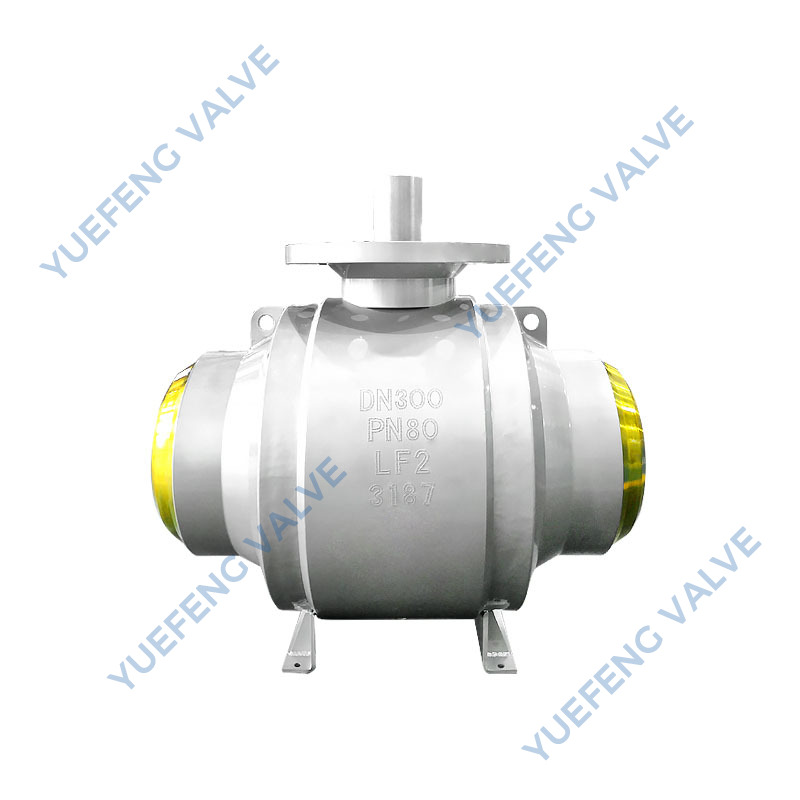
To understand why specific equipment is chosen for critical infrastructure, one must first examine its foundational construction. Unlike standard split-body or bolted valves, the body of a fully welded ball valve is manufactured by seamlessly welding forged steel components together into a single, continuous unit. During fabrication, highly automated welding processes ensure that the structural seams match the exact metallurgical integrity of the pipeline.
Most valves deployed in these demanding applications utilize a trunnion-mounted design. Rather than floating freely, the internal ball is mechanically anchored at both the top and bottom axes. This specific engineering choice proves crucial for reducing the operating torque required to actuate the valve. It also prevents the ball from being violently forced against the downstream seat under extreme flow conditions.
For natural gas transmission, this seamless architecture matters immensely. The complete absence of nuts, heavy flanges, and body gaskets naturally reduces the overall weight of the assembly. More importantly, it entirely eradicates the risk of joint separation, bolt relaxation, or gasket degradation over decades of continuous service. When sourcing a reliable buried gas pipeline valve, engineers look for this exact seamless construction to guarantee underground safety.
Placing infrastructure below ground protects it from surface-level accidents. However, it introduces a distinct, aggressive set of environmental and mechanical hurdles. A valve operating in the dark must survive conditions that above-ground refinery equipment never encounters.
The earth is far from static. Shifting soil, subtle seismic activity, violent freeze-thaw cycles, and heavy surface loads exert immense mechanical stress on buried infrastructure. Commercial highways or freight railway tracks crossing directly above compound this issue. If a valve relies on bolted joints, the continuous bending and shearing forces caused by ground movement will inevitably cause those bolts to stretch or loosen. This paves the way for hazardous micro-leaks.
Underground metals face a relentless assault from their environment. Fluctuating groundwater levels, varying soil acidity, microbial-induced corrosion, and stray electrical currents from nearby power grids constantly threaten the integrity of carbon steel. A traditional valve featuring crevices, exposed threaded bolts, or dissimilar metals creates an ideal breeding ground for galvanic corrosion to accelerate unnoticed.
Picture a maintenance crew tasked with replacing a degraded gasket on an above-ground valve. The job takes a few hours. Underground, that exact same task transforms into a logistical and financial nightmare. Excavating a buried pipeline requires deploying heavy earth-moving machinery, installing complex trench shoring to prevent fatal collapses, and securing environmental permits. The astronomical costs associated with digging up a pipeline render routine valve maintenance economically unviable. Therefore, the equipment must perform flawlessly without human intervention.
Given the harsh realities of subterranean environments, pipeline engineers rely on highly specific design features to mitigate operational risk. The fully welded architecture confronts these challenges head-on.
The primary directive for any gas pipeline operator is keeping the product contained. Fugitive emissions harm the atmosphere and create severe explosion hazards if invisible gas accumulates in soil pockets. By utilizing a single-piece welded body, engineers remove all potential external leak paths to the atmosphere. Lacking body joints, the valve essentially becomes a permanent, leak-proof extension of the pipe itself.
Materials selected for these applications prioritize maximum resilience. Manufacturers exclusively utilize forged steel bodies rather than cast alternatives. The forging process tightly aligns the grain structure of the steel. This eliminates the porosity, internal shrinkage, and microscopic cracks occasionally found in metal castings. This superior structural density allows the valve to absorb pipeline bending forces and extreme thermal expansion without cracking.
While the valve body must remain deeply buried, operators still require immediate control over the gas flow from the surface. To bridge this gap, fully welded valves are highly customizable and equipped with extended stems. This clever design encases the valve stem and internal sealant injection lines within a protective steel barrel. Consequently, the actuator or manual gearbox sits safely and ergonomically above ground.
Because the exterior profile of a welded valve is smooth and cylindrical, it is significantly easier to coat. Manufacturers apply specialized, heavy-duty underground coatings, such as dual-layer fusion-bonded epoxy or thick polyurethane. These advanced coatings bond perfectly to the crevice-free surface. They forge an impermeable barrier against moisture and soil acidity, ensuring the raw steel remains completely untouched by the elements.
Natural gas is heavily compressed to minimize its volume and maximize transportation efficiency. Specifically, the valves tasked with controlling this volatile flow are subjected to immense internal kinetic forces.
Mainline transmission pipes routinely operate at pressures ranging from 500 to well over 1500 PSI. Standard industrial valves would suffer catastrophic seat failure under these punishing conditions. To maintain safe flow control, engineers specify a robust high-pressure ball valve engineered with heavy-duty, spring-loaded seats. These dynamic seats maintain constant, adaptive contact with the trunnion-mounted ball. This ensures a bubble-tight seal even when pipeline pressure violently fluctuates during peak demand hours.
Safety during pipeline repairs is absolutely non-negotiable. Fully welded valves feature integrated Double Block and Bleed capabilities. This critical function allows operators to close the valve, simultaneously isolating high pressure on both the upstream and downstream sides. Technicians can then open a small bleed valve to safely vent any trapped gas from the body cavity. This physical proof confirms the valve is holding a tight seal, permitting maintenance crews to safely repair the downstream pipe.
The relentless friction of dry natural gas rushing through a pipeline can easily generate static electricity. To prevent a disastrous spark, these valves incorporate internal anti-static devices that ensure continuous electrical conductivity between the ball, stem, and body. Furthermore, they are manufactured to strict API 6D and API 607 fire-safe standards. In the rare event of a pipeline fire destroying the soft primary polymer seals, secondary metal-to-metal seals automatically engage to prevent the valve from feeding the inferno.
To clearly grasp the operational advantages, it is helpful to contrast the two primary valve types utilized across the energy sector.
Feature | Bolted / Split-Body Ball Valve | Fully Welded Ball Valve |
|---|---|---|
Body Construction | Two or three pieces held together by heavy bolts and nuts. | Single, seamless forged steel unit welded together. |
Leak Paths | Multiple potential leak paths at every body joint and gasket. | Zero external body leak paths. |
Maintenance Needs | Requires periodic bolt retorquing and gasket replacement. | Completely maintenance-free body; no tightening required. |
Weight & Size | Heavier and bulkier due to flanges and bolting hardware. | Compact, streamlined, and significantly lighter. |
Underground Suitability | Poor. Prone to soil stress, bolt corrosion, and joint separation. | Excellent. Designed specifically for direct burial environments. |
Initial Cost vs. ROI | Lower initial cost, but high long-term maintenance expenses. | Higher initial manufacturing cost, but superior ROI due to zero excavation needs. |
In contrast, while bolted valves remain a practical choice for above-ground facilities like compressor stations, their inherent vulnerabilities make them a severe liability when buried under tons of earth.
The economic argument for selecting specific pipeline equipment often boils down to installation efficiency and long-term durability.
One of the most significant cost-saving aspects of a fully welded body is its seamless compatibility with direct burial techniques. Because there are no internal parts to service on the valve body itself, construction crews can weld the unit directly into the mainline, apply a protective shrink sleeve over the weld, and immediately backfill the trench with soil. This streamlined process eliminates the need to construct expensive, reinforced concrete underground maintenance vaults.
Infrastructure projects operate on multi-decade timelines. These valves are meticulously engineered for a 30 to 50 year maintenance-free lifespan. The only routine maintenance ever required is the occasional injection of seat sealant or stem lubricant through the extended, above-ground fittings. This incredible longevity heavily offsets the initial purchase cost, providing pipeline operators with an exceptional return on investment.
Gas pipelines must be regularly cleaned and inspected using specialized devices known as pipeline inspection gauges, commonly referred to as pigs. Fully welded valves are manufactured with a full bore design. In practical terms, this means the internal diameter of the valve ball matches the exact internal diameter of the pipeline. When the valve is fully open, there is zero flow restriction. This allows cleaning scrapers and highly sensitive smart pigs to pass through freely without damaging internal components.
Specifying a fully welded ball valve is a critical engineering decision that directly impacts the safety and longevity of the entire transmission network. Any miscalculation in material selection or pressure rating can lead to catastrophic failures. Procurement managers and pipeline engineers must evaluate several stringent criteria to ensure the selected valve aligns perfectly with operational parameters.
The structural integrity relies heavily on the quality of forged steel components. When selecting the body material, engineers must consider the ambient underground temperature and the chemical composition of the natural gas. They must also verify the carbon equivalent of the steel to ensure proper weldability to the main pipeline.
Common materials include Carbon Steel ASTM A105 for standard environments, and ASTM A350 LF2 for pipelines operating in extremely low temperatures. Furthermore, if the pipeline transports sour gas containing hydrogen sulfide, the selected materials must strictly comply with NACE MR0175 standards to prevent sulfide stress cracking.
Proper sizing is paramount. Valves must be specified according to ASME pressure classes. Depending on the pipeline demands, operators typically select valves ranging from Class 150 up to Class 2500, accommodating sizes from 2 inches all the way up to 60 inches. The valve wall thickness, trunnion mounting design, and seat springs must all be engineered to withstand the maximum allowable operating pressure without deformation.
Because the valve body is buried directly in the earth, the operating mechanism must be accessible from the surface. The top mounting pad of the valve should comply with ISO 5211 standards. This ensures seamless integration with various actuation systems.
For direct burial applications requiring robust actuation compatibility, selecting a bare stem high-pressure fully welded ball valve ensures long-term operational integrity. A bare stem configuration allows pipeline operators the flexibility to install their preferred custom actuation systems above ground while trusting the deeply buried valve body to perform flawlessly.
Underground gas networks require highly durable, uncompromising equipment to operate safely. The harsh, inaccessible environment leaves absolutely no room for error. By eliminating external leak paths and drastically reducing maintenance requirements, the fully welded design protects the environment, ensures regulatory compliance, and significantly lowers long-term operating costs.
Choosing the right valve ensures your pipeline remains secure and efficient for decades to come. When planning your next subterranean infrastructure project, exploring high-quality fully welded ball valves from a trusted manufacturer will provide the exact specifications, API certifications, and forged steel reliability required to future-proof your gas transmission network.
Because the body is forged and welded shut into a single continuous unit, the internal components cannot be removed or replaced like they can in a bolted-body valve. However, these valves are strictly engineered for a 30 to 50 year maintenance-free lifespan. To address potential long-term wear, they are equipped with secondary sealant injection fittings. If minor seat wear or stem leakage occurs after years of operation, maintenance crews can inject specialized synthetic valve sealants through above-ground fittings to temporarily restore the integrity of the seating surfaces.
Natural gas pipelines are typically buried several meters underground to protect them from surface loads, agricultural activities, and extreme ambient temperature fluctuations. An extended stem bridges the gap between the deeply buried pipeline and the surface. It allows the valve body to remain safely underground in a stable environment while positioning the operating mechanism and the sealant injection ports above ground for easy, immediate access by pipeline operators.
Standard ball valves often use a floating ball design, where the pressure of the fluid pushes the ball against the downstream seat to create a seal. In high-pressure gas transmission, this design would create excessive friction and rapidly destroy the seats. A high-pressure variant utilizes a trunnion-mounted design. The ball is mechanically anchored at the top and bottom by heavy-duty trunnion shafts, absorbing the immense kinetic thrust of the gas. This significantly reduces operating torque, minimizes seat wear, and ensures a reliable seal under extreme pressure conditions.
No, and this is one of their most significant economic advantages. Traditional bolted-body valves require expensive concrete underground maintenance vaults so that technicians can access the bolts to tighten flanges or replace degraded gaskets. Because a fully welded valve has no external leak paths and requires no internal maintenance, it is designed for direct burial. This capability saves pipeline operators millions of dollars in civil engineering and long-term vault maintenance costs.
Before leaving the manufacturing facility, fully welded valves undergo rigorous non-destructive testing and pressure evaluations. Engineers perform high-pressure hydrostatic and low-pressure pneumatic seat tests in strict accordance with API 6D standards. Additionally, the Double Block and Bleed function is tested to verify that both the upstream and downstream seats hold a bubble-tight seal simultaneously before the valve is ever placed in the trench.
Fully welded ball valves can be manufactured to handle extreme kinetic forces, accommodating ratings up to ASME Class 2500. This translates to an ability to safely control natural gas flows at pressures well over 6000 PSI, depending on the ambient temperature and specific material grade selected for the pipeline project.


